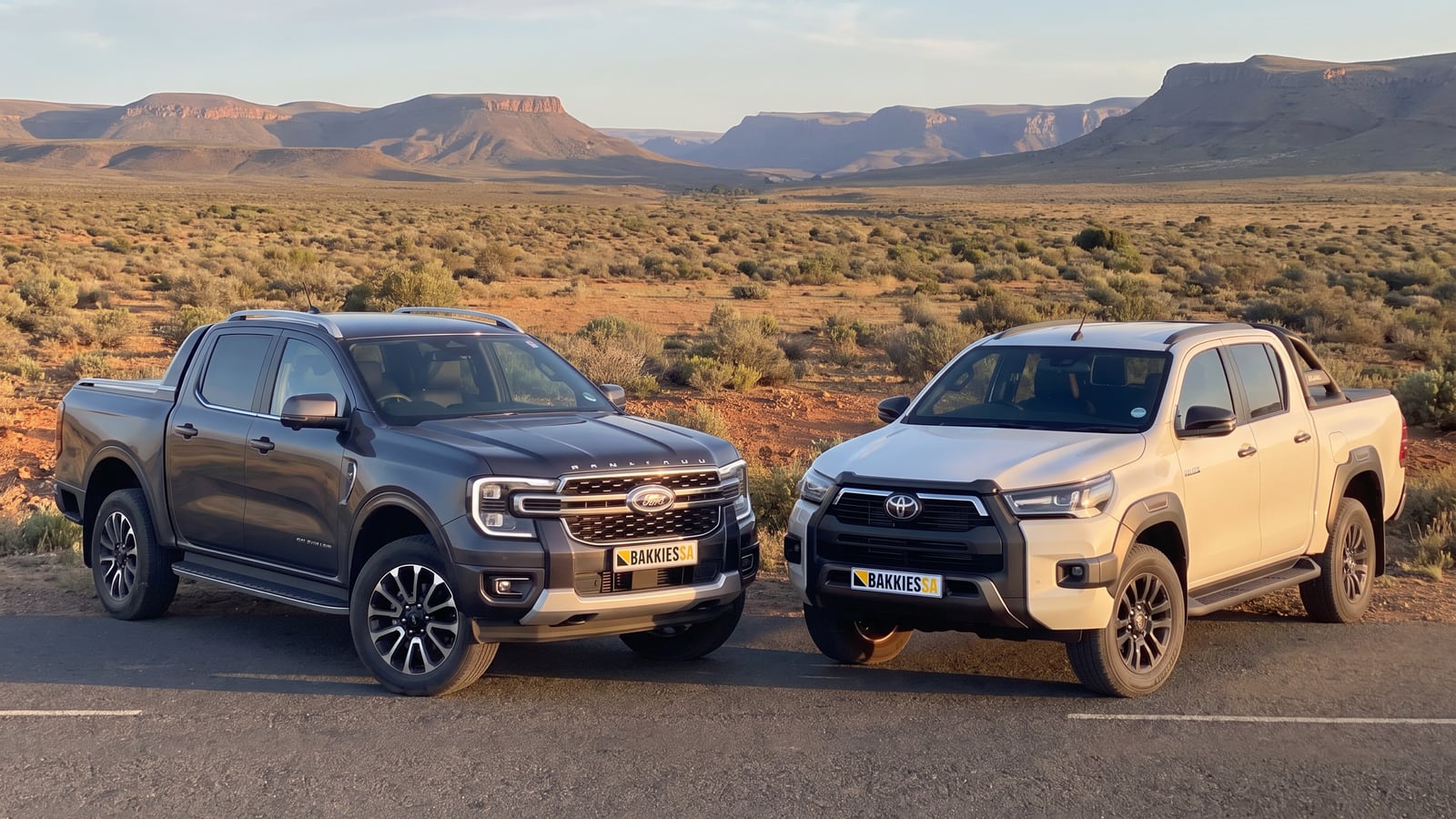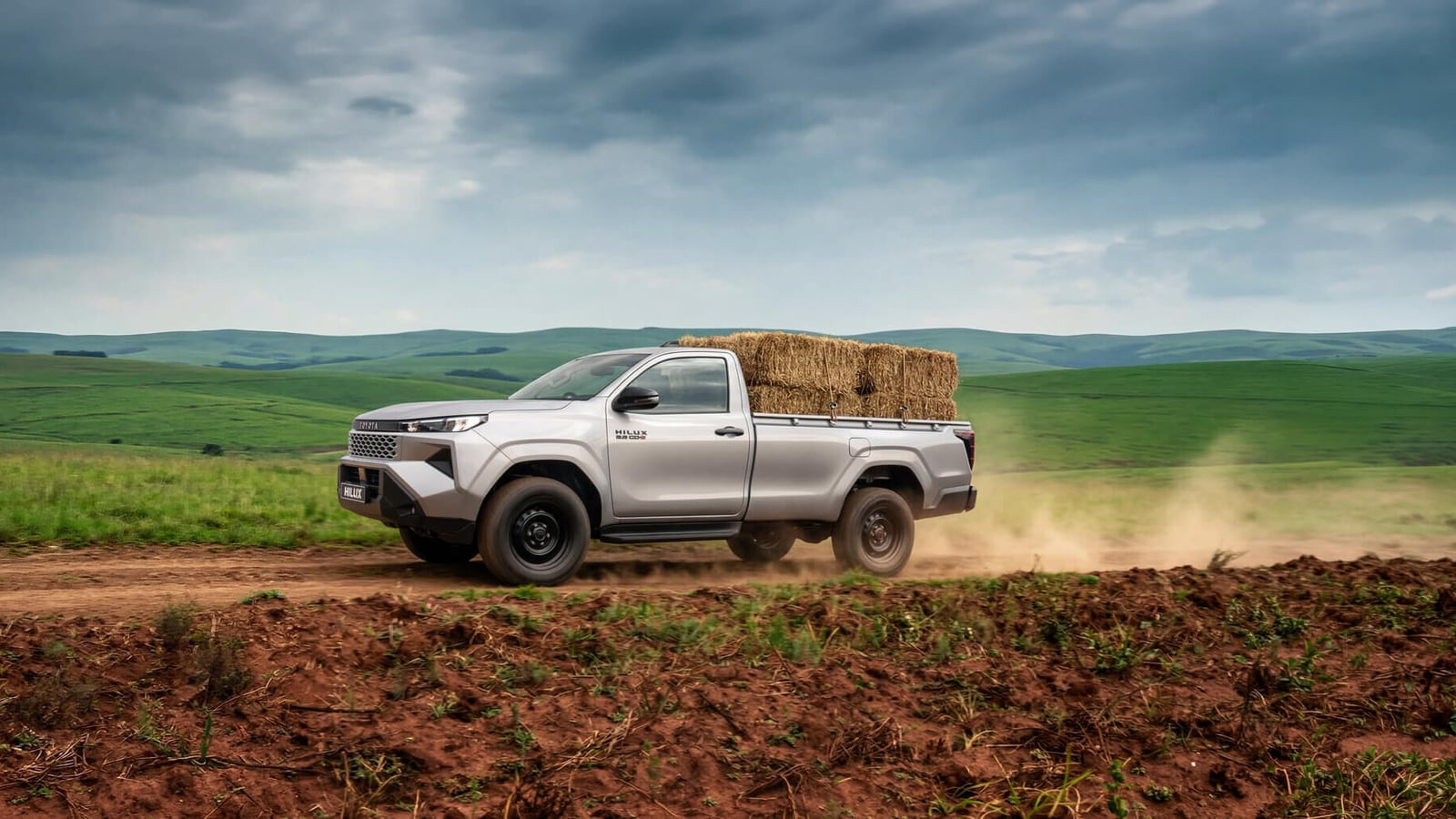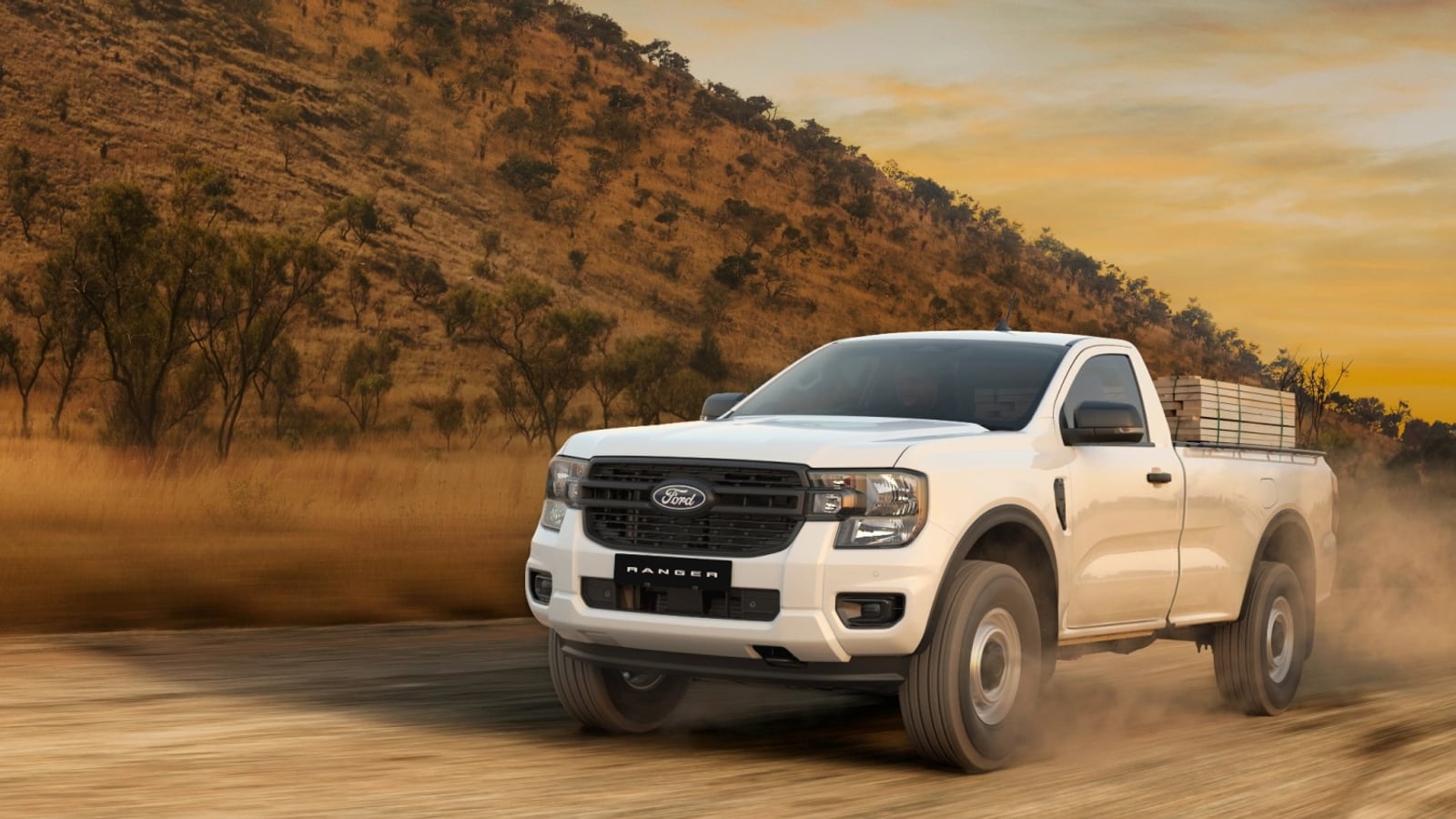
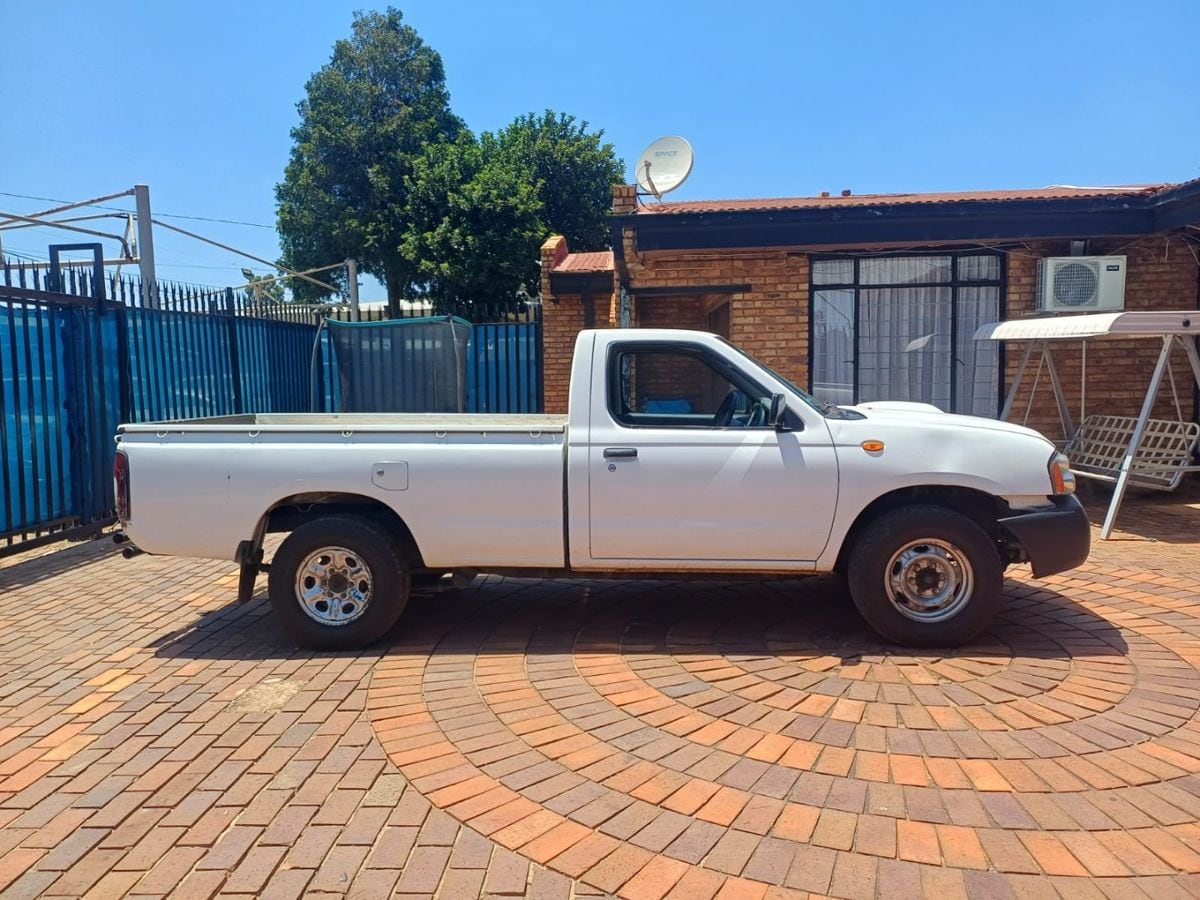
Every town in South Africa has one on a forecourt. A white single cab on steel wheels, a rubber liner in the bin, 240,000 km on the clock. The sticker says about R250,000. The Raider next to it, same year, asks R100,000 more. The cheap one was a company bakkie. The question is which company.
Rental firms, mines, couriers, municipalities and banks sell bakkies by the thousand. They sell on a calendar or a mileage rule, not because a mechanic gave up on them. Some of those bakkies have the best service files in the country. Some were driven by whoever had the keys that day. This guide is about telling the two apart.
Prices are asking prices from September 2026, from every bakkie listed for sale across South Africa. They are what sellers ask, not what bakkies sell for.
Where fleet bakkies come from
A fleet is not one thing. Locals split it by who was responsible for the bakkie.
Rental returns. The youngest ones. Avis says its rental bakkies leave the fleet before two years old or 100,000 km, serviced to the maker’s schedule. The forum joke is “one owner, several careful drivers”. The forum says they are fairly priced, not cheap.
Company and lease bakkies. Many firms lease them from a fleet company such as Avis Fleet or Eqstra. The fleet company pays for every service and repair, and the workshop must get each job approved first. So every job is on record. Eqstra says its clients replace vehicles about every three years, or six months before the maintenance plan runs out. The one locals worry about is the pool bakkie, with no named driver, where nobody owns it so nobody looks after it.
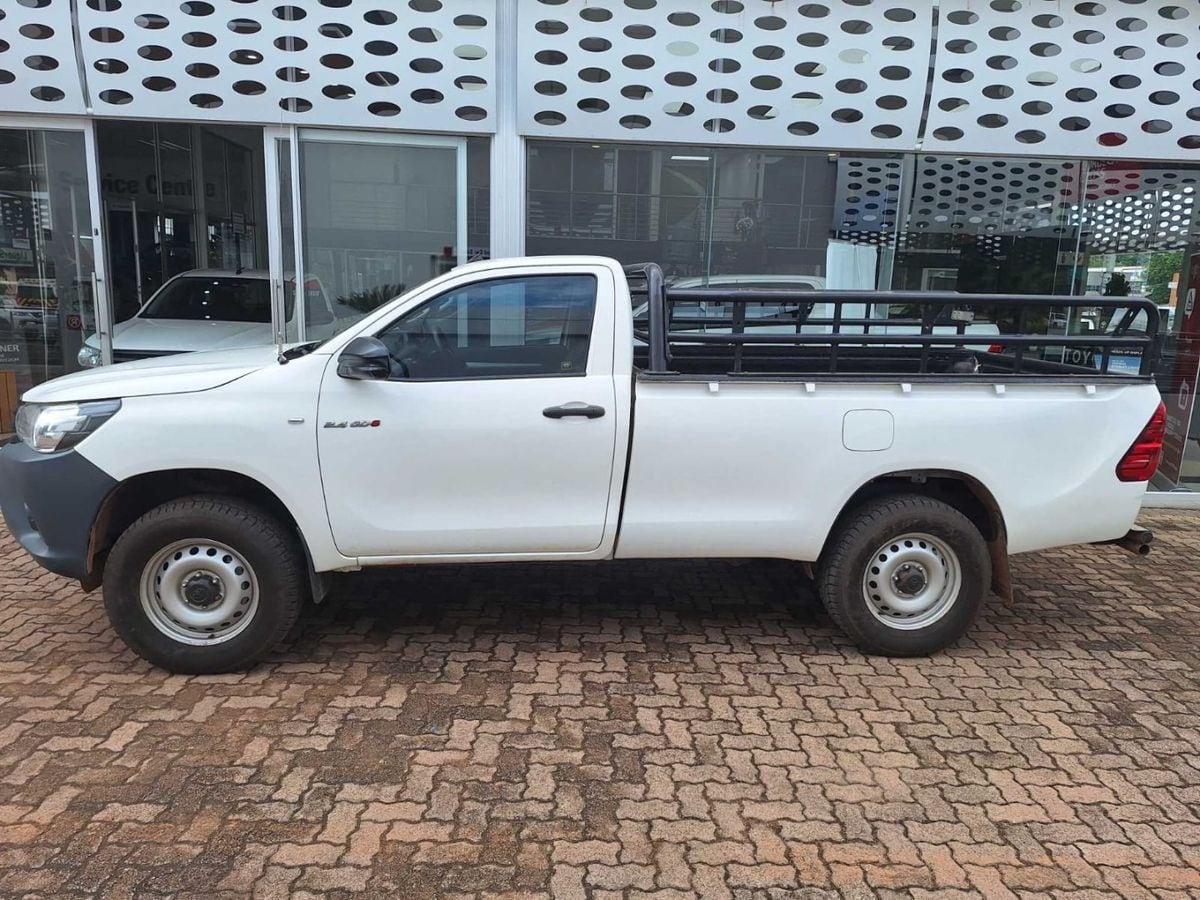
Mine and site bakkies. Toyota and Ford both sell a factory “mine spec”. The Hilux SR narrow body has steel wheels, rolled bin sides and no radio. The Ranger XL Plus has a second battery. “Ex-mine” is a different thing. It means shifts on a dust road, hours of idling, sometimes four-wheel drive all day. Mine sales print engine hours next to the odometer. One 2015 Land Cruiser on a current mine sale shows 3,474 km and 17,949 hours.
Municipal, government and security. Sold on a rule. Pietermaritzburg’s council replaces its bakkies at 200,000 km or five years. Lephalale’s rule is the same distance, or five to ten years. Both service to the maker’s schedule, with a roadworthy test every year once the warranty is over.
Bank repos. A repo is sold when the bank gets it back. The owner in trouble usually stopped servicing months before, and often stripped the tow bar, canopy and radio before the bank collected. The bank sells it at auction, and the old owner still owes the shortfall. A repo is often the cheapest bakkie in the room, and the one with the worst last year.
There is one more route, and it is the best one: buying the bakkie you drove for the company. You know its history because you made it.
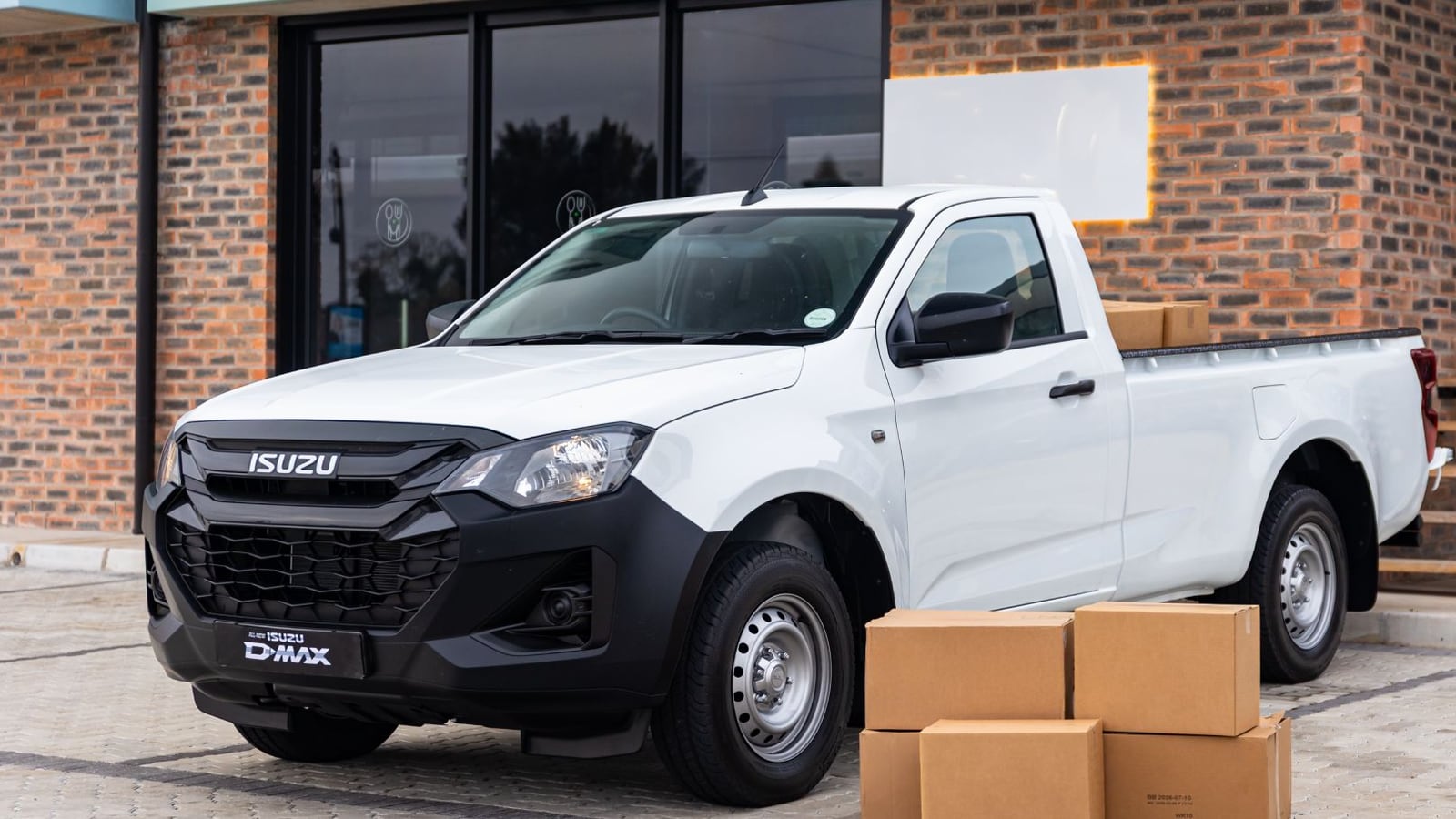
Why are they all single cabs? A single cab counts as a commercial vehicle, so a business can claim the VAT back on it. A double cab usually does not qualify. That is why fleets buy white single cabs.
How to tell from the paperwork
Sellers do not tell you. On live listings, “ex-fleet” appears in about one advert in 500. Nobody writes “repo”, “municipal”, “Eskom” or “auction”. The word “fleet” is on about 4 percent of adverts, and nearly all of that is “ideal for fleet use”.
The registration paper. Every vehicle has a registration certificate, and the seller must hand it over. It has two names on it: the owner and the title holder. If the owner is a company, a rental firm or a municipality, it was a fleet bakkie. If the title holder is a bank, the bakkie is still financed, and you will need a settlement letter (more below). “SR” on a Hilux or “XL Plus” on a Ranger in the model line is the mine spec.
The service file. A fleet bakkie should have a file of invoices, not a book of stamps. Dealers write “full service history” to make the phone ring, and it appears on one advert in six. Phone the servicing dealer with the VIN and ask for the printout. The mileage at every visit should climb in a straight line. One forum member watched a repossessed Isuzu sold as “full history” with a 60,000 km gap hidden by a story about private use.
The holes. Roof holes from a beacon or a light bar. Paint shadows on the doors where the fleet number was. Water gets into a badly plugged roof hole and rots the headlining.
The crash you cannot see. Big fleets insure themselves, so a fleet crash never reaches the insurance databases. Look for repaint and uneven panel gaps yourself.
The inspection, in order
- Phone the dealer with the VIN before you drive there. Ask for services, mileages and recalls. If the printout stops at 90,000 km and the clock says 200,000 km, you have your answer.
- Cold start with the bonnet up. Blue smoke is oil. White smoke that stays is coolant or injectors. Black smoke under load is fuelling. A rattle that clears after a minute is the injectors on any of these diesels.
- Look under the oil filler cap and in the coolant bottle. Milky sludge under the cap, or oil in the coolant, is a cooler or a head gasket. On a Ranger 3.2 this is the whole inspection.
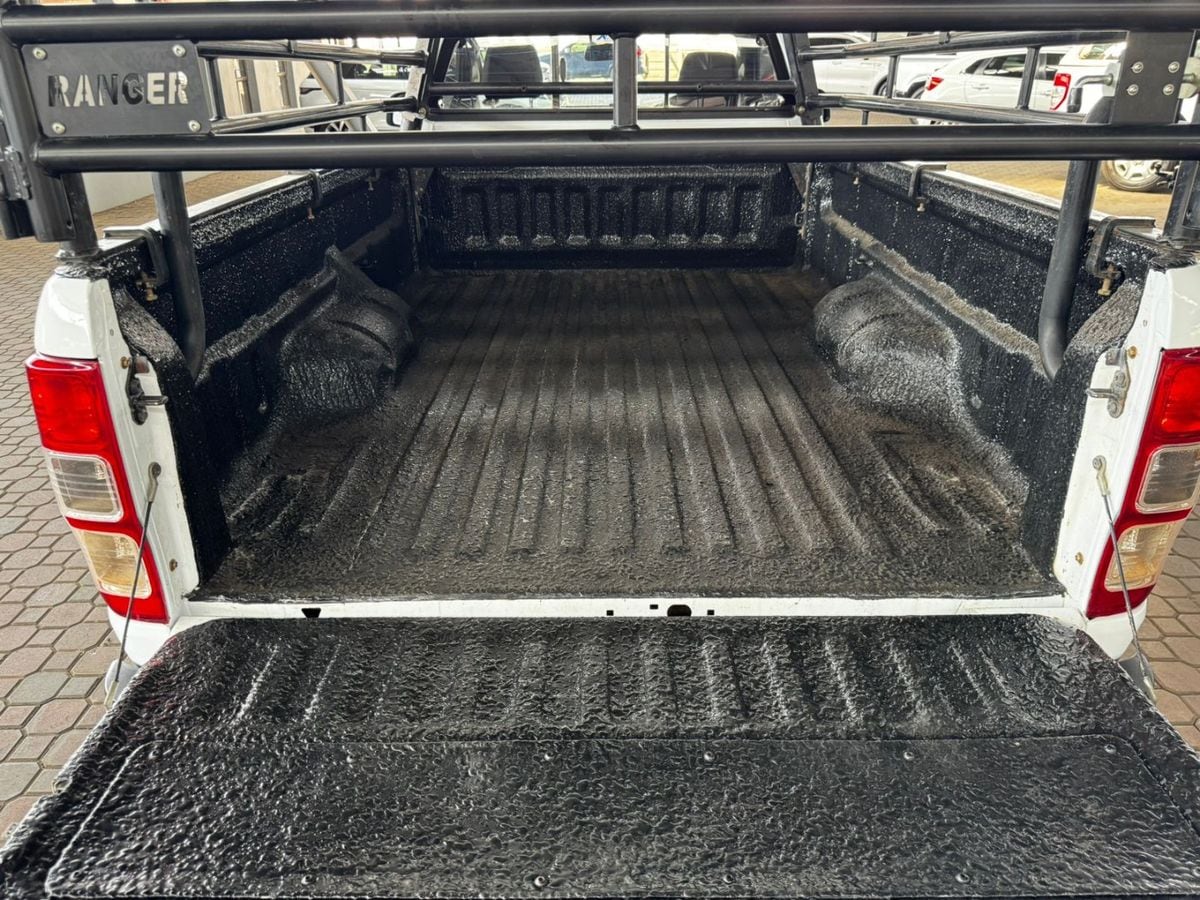
- Lift the bin liner. A rubber liner hides a floor beaten flat or rusted through where water sat. Check the tailgate hinges, the tailgate cables and the tie-down points.
- Get under the back. Sagging or cracked leaf springs, or heavier aftermarket ones, mean overloading. Look at the chassis rails behind the rear axle for bends, welds and rust. A twisted tow bar plate means heavy towing.
- Pull the air filter. Red or grey dust on the clean side of the box means the engine has been breathing it. On a Hilux the flexible airbox lid warps and dust reaches the air sensor, which puts the bakkie in limp mode.
- On a 4x4, use it. Engage high range, then low range, then the diff lock, and drive in each. On an ex-mine Hilux listen for a whine or chain slap from the transfer case. A fleet manager reports transfer chains failing within 20,000 km on sites that run in four-wheel drive all day.
- On an automatic, crawl and then pull hard. Hard, jerky shifts on a Ranger six-speed are the control module. Shudder at 50 to 80 km/h on a Hilux automatic is the valve body.
- Tyres and brakes. Four different budget tyres tell you the maintenance budget. A lip on the discs and pads down to the plate tell you what “fully serviced” meant.
- Does the wear match the clock? A 120,000 km bakkie with a seat worn to the foam, a shiny steering wheel and bare pedal rubbers has done more. The dealer printout by VIN is the cheapest hard check. A scan tool can read the mileage stored in the control modules, which does not always match a wound-back cluster.
One thing you do not need to check on most of these. The Hilux, the old-shape Ranger, the D-Max, the NP300 and the Triton sold in South Africa have no diesel particulate filter. Short trips and idling do not clog anything on them. Only four bakkies here have one. They are the Amarok 3.0 V6 of 2017 to 2022, the imported Navara 2.3 of 2017 to 2020, the GWM P-Series from 2020 to mid-2022, and the new-shape Ranger V6. On those, ask about warning lights and forced burns, because short-trip fleet use blocks the filter.
What mileage means on a fleet bakkie
Highway kilometres are the good kind. A rep’s bakkie that does 60,000 km a year on the N1 has an easier life than a school-run car doing short cold trips.
Hours are the bad kind, and they never show on the clock. A security or mine bakkie that idles for whole shifts has done more work than its kilometres say. The forum argues about how much harm idling does. A workshop member says mine bakkies idle full shifts and still reach 400,000 km. The sober version: ask for the hours. Every fleet tracker logs engine hours, and the fleet has the report. The new-shape Ranger shows lifetime engine hours on its dashboard. Divide the kilometres by the hours. Sixty or more is a highway bakkie. Twenty means it sat and idled.
The other honest line from the forum: past 200,000 km there are no free rides. A perfect service file does not move the mileage at which parts wear out. These are the jobs high mileage brings on, and what they cost here:
| Bakkie | What goes | When | About how much |
|---|---|---|---|
| Ranger 2.2 | Timing chain | From 150,000 km. Two fleet bakkies with full records broke theirs at 156,000 and 175,000 km | R6,000 to R12,000 before it goes, R25,000 to R45,000 after |
| Ranger 2.2 | Injectors | After 200,000 km | R15,000 to R30,000 a set |
| Ranger 2.2 | Turbo | 180,000 to 280,000 km | R15,000 to R35,000 |
| Ranger 2.2 and 3.2 | Six-speed automatic control module | About 100,000 km | R22,000 to R32,000 |
| Ranger 3.2 | Oil cooler and EGR cooler | Any mileage | R8,000 to R18,000. Miss it and Ford quotes a whole engine at R110,000 to R220,000 |
| Hilux 2.4 and 2.8 | Injectors | Worst past 200,000 km | R20,000 to R35,000 a set |
| Hilux 2.4 and 2.8 | Turbo actuator | 120,000 to 180,000 km | R5,000 to R10,000. R25,000 to R45,000 for the whole turbo |
| Hilux 2.4 and 2.8 | Clutch and flywheel | Fleet clutches go early | R14,000 to R28,000 |
| Hilux 2.8, before mid-2017 | Timing chain rattle on cold start | 20,000 to 80,000 km | R12,000 to R25,000 out of warranty |
| NP300 2.5 | Timing chain stretch | Before 100,000 km | R20,000 to R35,000 |
| NP300 2.5 | Injectors | High mileage | R15,000 to R25,000 a set |
| NP300 2.5 | Bottom-end bearings | High mileage | R45,000 to R80,000 rebuild |
| Pik Up 2.2 | Melted piston (one reported at 99,000 km) | Rare, but it is a whole engine | Over R200,000 with the turbo, paid under warranty |
Read the table as a bill. A Ranger 2.2 at 260,000 km with a perfect stamp record still has injectors, a turbo and a chain check due, about R40,000 to R70,000. The only history that moves that bill is an invoice showing the fleet already paid it.
What they ask
About one in eight used Rangers and Hilux GD-6s for sale is over 200,000 km. On the NP300 it is more than a third. This is what the working single cab asks by mileage:
| Bakkie | Under 100,000 km | 100,000 to 200,000 km | 200,000 to 300,000 km | What you are looking at |
|---|---|---|---|---|
| 2020 Ranger 2.2 XL | R325,000 | R300,000 | R250,000 | The fleet Ranger. Drops R15,000 to R35,000 for every 50,000 km |
| 2021 Ranger 2.2 XL | R330,000 | R300,000 | R260,000 | Same story a year on |
| 2021 D-Max 250 single cab | R290,000 | R260,000 | R240,000 | Drops R13,000 to R23,000 for every 50,000 km |
| 2019 Hilux 2.4 S single cab | R270,000 | R280,000 | R270,000 | The Hilux barely drops for mileage inside a year. Few under 100,000 km for sale |
| 2023 Hilux 2.4 S single cab | R325,000 | R330,000 | R280,000 | Still true on the newer ones. Few over 200,000 km for sale |
The Hilux workhorse hardly discounts for kilometres. A 2019 2.4 S single cab asks about R280,000 whatever the clock says. And on every working single cab the ask stops falling at about 200,000 km. Past that, the seller prices the year and the service file, not the extra kilometres. The leisure double cabs are different. A Hilux 2.8 double cab loses R20,000 to R40,000 for every 50,000 km, two to three times what the single cab loses.
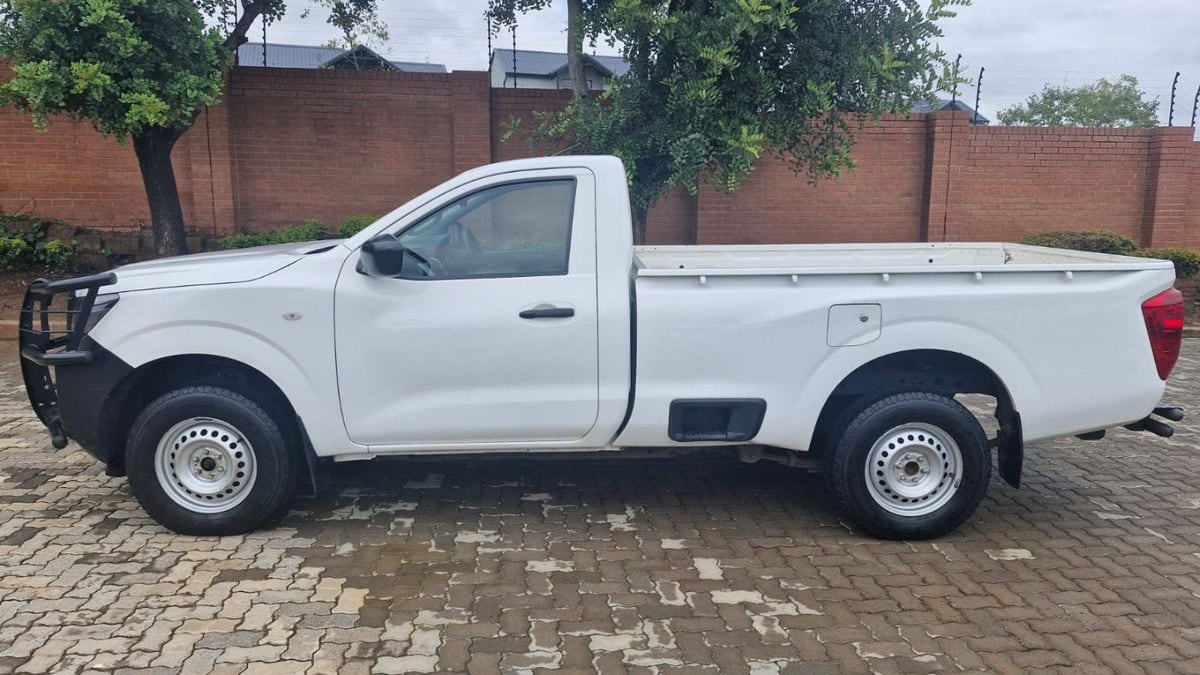
The floor, for 2016 to 2020 single cabs. Only a handful of Hilux 2.4s ask under R200,000. About half the Ranger 2.2s do, and a few D-Max 250s. Nearly every NP300 2.5 and Pik Up 2.2 of those years asks under R200,000, and many ask under R150,000.
What to pay
Where the bakkie is being sold changes the price more than whether it was a fleet.
At a dealer, the fleet bakkie is priced at the going rate for its year, less the mileage discount above. A Hilux 2.4 S single cab asks R65,000 to R110,000 less than a Raider single cab of the same year. A Ranger XL single cab asks R30,000 to R60,000 less than the XL double cab. Adverts that say “one owner” ask R10,000 to R30,000 more than the same bakkies without it. The word “fleet” moves nothing.
At auction, the hammer price is not the price. Take Aucor’s own formula for a runner: the bid, plus 6 percent commission, plus a R2,600 paper fee, plus 15 percent VAT on all three. A R250,000 bid becomes about R308,000. At the WesBank repo sales there is no commission, only a R2,242.50 handling fee plus VAT, so the same bid is about R290,000. Always compare the bid plus fees to a dealer’s sticker. A VAT-registered business claims the 15 percent back on a single cab. You do not. That is why dealers outbid private buyers on Toyota single cabs, and why the forum says a Hilux at auction often goes for more than retail.
The rules are the same at every house. You pay a deposit to bid, R5,000 to R10,000, refunded if you buy nothing. You look on the viewing days, and Burchmore’s lets you start the engine the day before. There are no test drives. Everything is sold voetstoots, as is, and no sale is subject to finance. The catalogue prints the odometer, the VIN, a one-line condition note and the delay on the registration paper, up to 14 weeks on a bank repo. Bid at trade value, not retail. A site that wants a “holding deposit” before you may view is a known scam, so phone the head office yourself.
Privately, or from a small dealer, the number in your head is the table above, less the repairs due. A 2012 Hilux 2.5 double cab at 309,000 km was offered as “immaculate” at R250,000. The forum’s reply: no 300,000 km bakkie is spotless, it was probably a fleet bakkie tidied up after auction, and R180,000 is the ceiling.
Warranty, finance and the roadworthy
Factory warranty. Toyota gives 3 years or 100,000 km, and it transfers to you if every service was done. Ford gives 4 years or 120,000 km, and Ford dealers say it moves to the next owner. Nissan gives 6 years or 150,000 km, and its own terms say it passes to the second and later owners if a Nissan dealer did the servicing. Isuzu gives 5 years or 120,000 km, and Mahindra 4 years or 120,000 km. The condition in every case is unbroken dealer servicing, which is exactly what a fleet contract produces.
Paid warranty. A bakkie under 15 years old and under 300,000 km, with a full service history, can still get a mechanical warranty from a bank or an insurer. Over 300,000 km there is nothing. Budget for services too. A routine service with no plan is R3,000 to R8,000, and a big one is R8,000 to R15,000.
Finance. Most banks stop at ten years old. WesBank and Nedbank’s MFC say ten, and Absa says twelve. No bank publishes a mileage cap, but a bakkie over about 200,000 km usually means a bigger deposit or a personal loan at a higher rate. At auction you pay cash, or the bank’s money must land within 48 hours.
The settlement letter. If the title holder on the registration paper is a bank, the bakkie is still financed. The seller asks the bank for a settlement letter, good for about 14 days. You pay the bank, not the seller. The bank releases the registration paper once the money clears.
Police clearance. The registration paper carries a code. Code 2 is a normal used vehicle and needs nothing. Code 3 means it was written off and rebuilt. It cannot go into your name until the police have checked the engine and chassis numbers. A stolen-and-recovered vehicle needs the same clearance, and so does one with a replacement engine. Check the engine number on the paper against the block.
The roadworthy. It is your job, by law. You register the bakkie within 21 days of buying it, with the change of ownership form, the registration paper and a roadworthy certificate. The test takes about 30 minutes and doubles as a second inspection. At auction the licence arrears are yours too.
When to walk away
- No service record on anything over 100,000 km.
- The dealer’s printout by VIN stops well short of the clock.
- Milky sludge under the oil cap, or oil in the coolant.
- A bent or welded chassis rail.
- Wear that does not match the clock.
- A roof hole plugged with silicone and a damp headlining.
- A “runner” at auction that nobody will start for you.
- A seller who cannot show the registration paper, or a bank as title holder with no settlement letter.
- Code 3 on the paper at a normal used price.
- An auction site that wants a deposit before you can view.
The decision
The best fleet bakkie is the one sold before it reached the fault windows. A rental return at 60,000 to 100,000 km, or a lease return under three years old with the invoices. It asks the going rate for its year. It is not cheap. It is safe.
The second best is the one where the fleet already paid the bills. A Ranger 2.2 at 250,000 km with invoices for injectors, a turbo and a chain is a better buy than one at 200,000 km with none. Price it with the fault table in your hand.
The one to be careful with is the cheap one. A Ranger 2.2 single cab at R120,000 with 250,000 km and a stamp book is priced for what is coming. Add R40,000 to R70,000 and it is the going rate for a bakkie with three bills due. A Hilux 2.4 single cab at R280,000 with 250,000 km is the opposite problem. The price never dropped for the kilometres, so you pay for the badge and still owe the injectors.
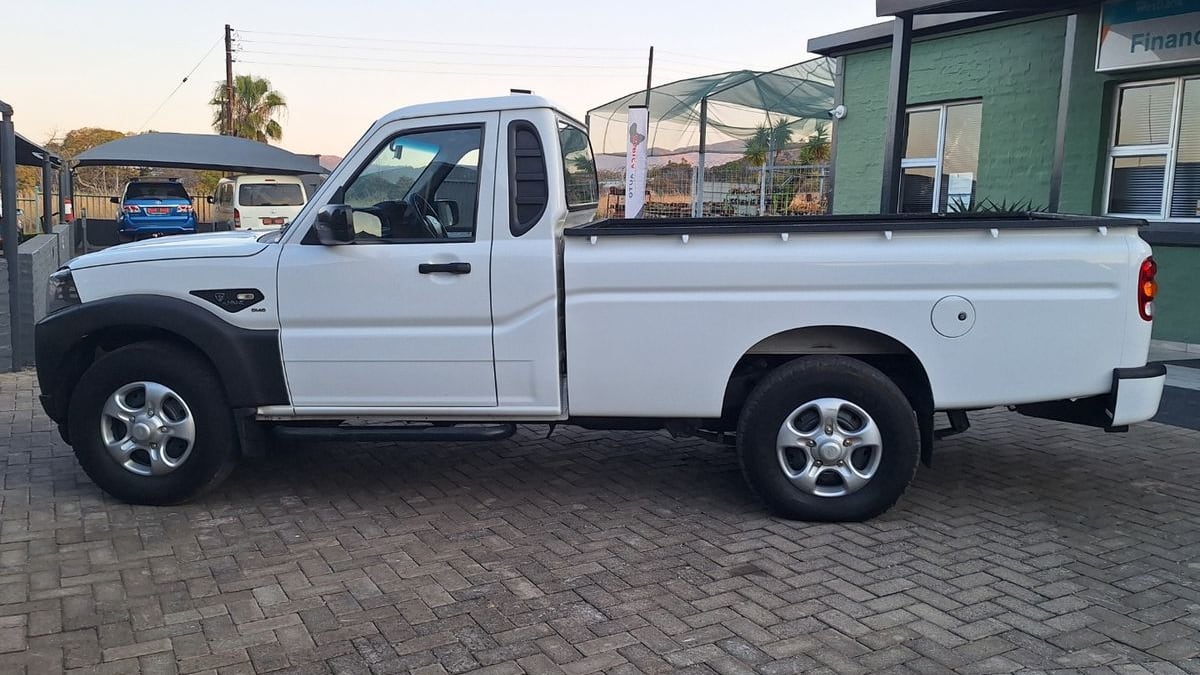
Whichever you choose, get the printout, lift the liner and read the registration paper. Then look at the Hilux, Ranger, D-Max and NP300 single cab listings, where every bakkie is shown next to the going rate for its year.
Questions people ask
Are ex-fleet bakkies a good buy?
The good ones are. A rental return or a lease return is sold on a rule, not because it broke, and it comes with a file of invoices that a private seller cannot match. The risk is not the fleet. It is the mileage. Injectors, a turbo and a timing chain all fall due between 150,000 and 280,000 km on a Ranger 2.2, whoever serviced it. So a fleet bakkie under 100,000 km is the safe buy. One at 250,000 km is only a good buy if the fleet already paid for those jobs, and you have the invoices to prove it.
How do I know if a bakkie was a fleet bakkie?
Read the registration paper, not the advert. It names the owner and the title holder. A company, a rental firm or a municipality as the owner means a fleet bakkie. A bank as title holder means it is still financed. Then look for the holes: plugged holes in the roof from a beacon, brackets in the load bin, paint shadows on the doors where the fleet number was. Sellers almost never say. Only about one advert in 500 says ex-fleet, and nobody writes repo, municipal or auction.
What does a bakkie at auction really cost?
More than the number you bid. At Aucor a runner carries 6 percent commission, a R2,600 paper fee and 15 percent VAT on all of it, so a R250,000 bid becomes about R308,000. At the WesBank repo sales there is no commission, just a R2,242.50 fee plus VAT, so the same bid is about R290,000. On top of that you pay for the roadworthy, any licence arrears, and you wait up to 14 weeks for the registration paper on a bank repo. There are no test drives, and everything is sold as is.
Does the factory warranty carry over on a used fleet bakkie?
Usually, if every service was done at a dealer. Toyota's 3 year or 100,000 km warranty transfers on that condition. Nissan's 6 year or 150,000 km warranty passes to the second and later owners in its own terms. Ford dealers say the 4 year or 120,000 km warranty moves with the bakkie. Most fleet bakkies are already past those limits, but a bakkie under 15 years old and under 300,000 km with a full service history can still get a paid mechanical warranty from a bank or insurer. Over 300,000 km there is nothing.
Figures are seller asking prices aggregated from South African listing platforms and dealers, not final selling prices. Most vehicles transact below asking. Updated continuously.
buying-guideex-fleetsingle-cabworkhorse