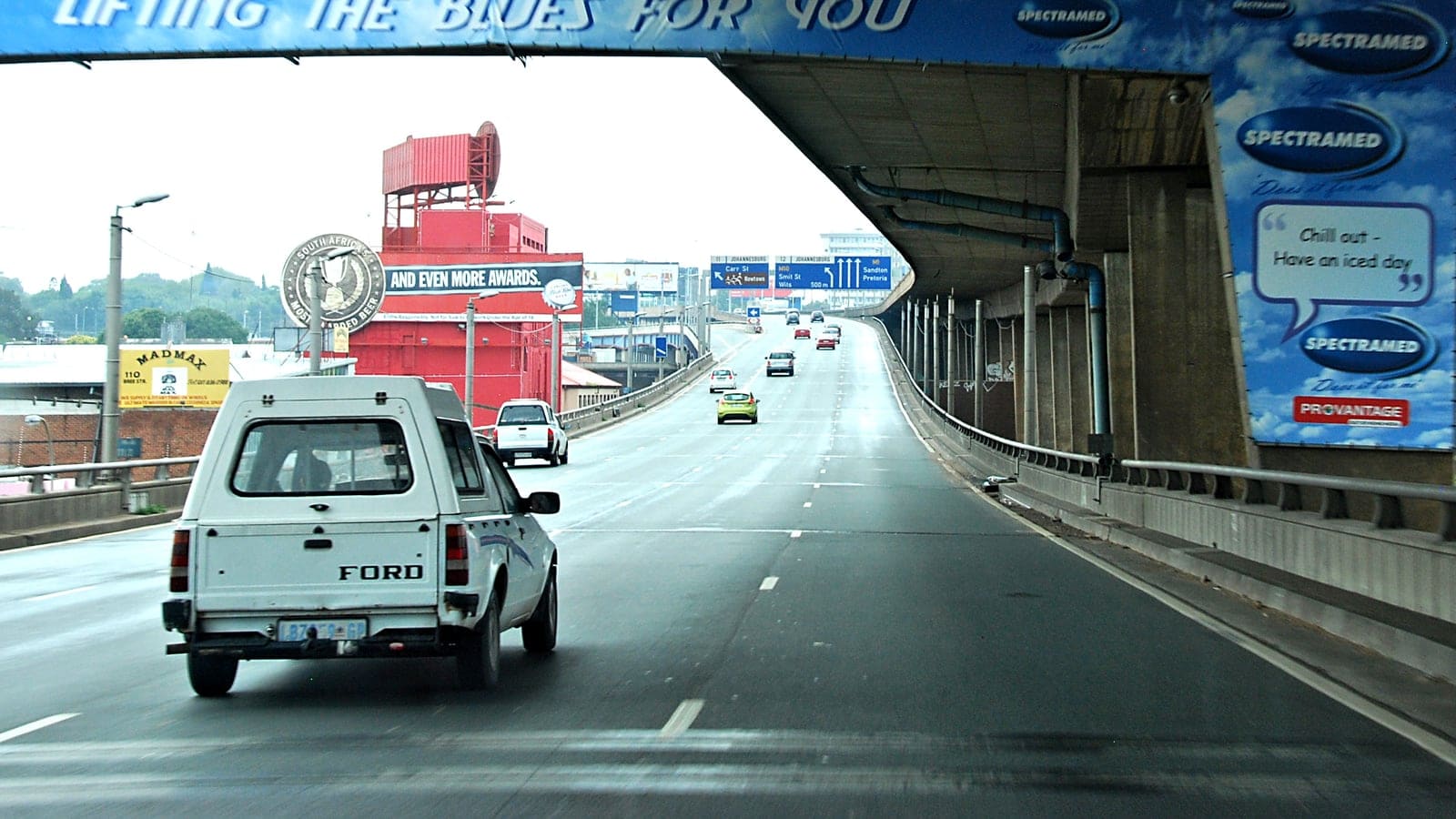
Everybody’s uncle had one. The bakkie that delivered the bread, carried the plumber’s ladder and then became somebody’s first car. Ford built the Bantam for 28 years. The last one left the Silverton plant in Pretoria on 17 November 2011.
Then the half-ton bakkie went away. The Chevrolet Utility, which took over from the Corsa Utility, left with General Motors at the end of 2017. Nissan stopped building the NP200 in March 2024. Today you cannot buy a new half-ton bakkie in South Africa. So people still buy old Bantams.
Right now about 56 Bantams are for sale across the country. The typical one is a 2008 with about 191,500 km, asking around R70,000. That makes it the cheapest way into a bakkie. This guide is about buying one without buying a problem.
The short answer
- Is it worth it? Yes, if you pay cash, carry light loads and have a mechanic you trust. Every Bantam is at least 14 years old. You are buying how it was looked after, not the badge.
- What should I pay? About R67,000 for a 2003 to 2008. About R82,500 for a 2009 to 2011. Only pay over R100,000 for a late one with low kilometres and a file of invoices.
- What goes wrong? Bantams that crank but will not start, overheating that is hard to trace, and worn gearboxes. The checks are below.
- Where are they? Mostly in Gauteng, which has 36 of the 56. KwaZulu-Natal has one right now and the Eastern Cape one. There is no new Bantam, so you buy from a used car dealer or a private seller.
- What else could I buy? A used NP200 asks about R16,000 more than a typical Bantam, and it is typically nine years newer.
Prices here are asking prices from October 2026, taken from every Bantam listed for sale in South Africa. They are what sellers ask, not what bakkies sell for. The live numbers are on the Bantam listings page and the Bantam market page.
What a Bantam costs
Almost every Bantam for sale is the Fiesta-based one built from 2002 to 2011. This is what they ask by age:
| Years | For sale | Asks about | Typical km |
|---|---|---|---|
| 2003 to 2006 | 16 | R67,000 | 200,500 |
| 2007 to 2008 | 18 | R67,500 | 196,800 |
| 2009 to 2011 (last facelift) | 20 | R82,500 | 188,900 |
| 1987 (first generation) | 2 | R47,000 | 32,400 |
The facelift years carry about R15,000 more. Before that, age hardly matters. The 2003 to 2006 group and the 2007 to 2008 group ask about the same.
Most are cheap. Of the 56 for sale, 49 ask under R100,000 and 19 ask under R60,000. The dearest asks R139,950.
Mileage matters less than you think. A Bantam under 150,000 km asks about R83,000 (14 for sale). Between 150,000 and 250,000 km it asks about R70,000 (27 for sale). Over 250,000 km it still asks about R69,000 (13 for sale). Past 150,000 km the price stops falling. So a high-mileage Bantam is not a bargain. A low-mileage one with invoices is worth the extra.
The 1.6 costs the same as the 1.3. Both ask about R70,000 (19 and 33 for sale). The bigger engine is free.
Nobody is giving them away. A new 2009 1.3 cost R101,950. A 2009 Bantam now asks about R80,000 (5 for sale). That is not an investment, because R80,000 buys far less today than it did in 2009. It just means you should not expect a steal.
Most are in Gauteng. Of the 56, 36 are in Gauteng and 8 are in the Western Cape. KwaZulu-Natal and the Eastern Cape have one each. If you live in Pietermaritzburg, Durban or Gqeberha, plan on a trip up. The Gauteng listings are where the choice is. Keep an eye on the KwaZulu-Natal listings too.
They go fast. In the last six months, 42 Bantam adverts came down. They were gone about eight days after they first appeared. If a good one comes up, phone that day.
Which Bantam is it?
There have been three Bantams. All three were front-wheel-drive bakkies built on a car.
| Bantam | Years | Built on | What you will find |
|---|---|---|---|
| The first one | 1983 to about 1990 | Ford Escort | A handful, mostly nostalgia buys |
| The second one | The 1990s | Mazda 323 | Very few. Also sold as the Mazda Rustler |
| The third one | 2002 to 2011 | Ford Fiesta | Nearly all of them. 54 of the 56 for sale |
The one you are most likely buying is the third. It was built at Silverton until November 2011, when Ford turned the plant over to the new Ranger.
How to date an advert photo. In 2009 the Bantam got a new front: new headlights and a new grille. If the photo shows the newer face, it is a 2009 to 2011 Bantam. If an advert says 2012, the bakkie was registered in 2012. The last one was built in November 2011.
The engines
| Engine | Years | Power | Torque | What to know |
|---|---|---|---|---|
| 1.3 Rocam petrol | 2002 to 2011 | 55 kW | 110 Nm | The most common one. Timing chain |
| 1.6 Rocam petrol | 2002 to 2011 | 70 kW | 137 Nm | Same price as the 1.3 used. Timing chain |
| 1.8 diesel, no turbo | Early years only | 44.2 kW | 105.6 Nm | None for sale right now. Cam belt |
| 1.4 TDCi turbodiesel | 2009 to 2011 | 50 kW | 160 Nm | Only one for sale right now. Cam belt |
Rocam stands for roller finger camshaft. It is Ford’s simple eight-valve petrol engine. The good news is the timing chain: there is no belt to replace on a petrol Bantam. The diesels do have a cam belt, so ask for the invoice for the last change.
Ford listed the 2002 to 2011 Bantam with a five-speed manual only. If an advert says “auto”, check it, because it is almost certainly a typo.
The Bantam is a true half-ton. It carries 630 or 650 kg, depending on the version. Its rivals carried closer to 800 kg when it was new. If you need to carry more, you need a bigger bakkie.
The diesel is the one people wish they had. A 2009 road test said about 6.5 litres per 100 km was easy to get from the 1.4 TDCi. But it was only sold for about two years. Right now there is one for sale, a 2011 at R59,900 with about 250,000 km. Don’t plan your budget around finding one.
What goes wrong
The Bantam does not have the big owner forums that the Ranger and Hilux have. So this is not a list of known faults with repair bills. It is what owners post about most often.
- It will not start. This is the complaint owners post most. The engine cranks but does not fire. Some owners say the security light stays on. Ask a mechanic to check the immobiliser.
- It runs hot. Owners fit a new thermostat housing, a thermostat and even a water pump, and it still overheats. The fault often turns out to be the cooling fan, the fan resistor or the temperature sensor.
- The 1.3 dies when it is warm. It starts fine cold, then cuts out. Owners point at fuel delivery and the idle control valve.
- Electrical faults. A charging light that stays on after a new alternator. Fuses that blow every time you turn the key.
- Gearbox wear. Worn bearings and gear selector parts. One owner says a good second-hand gearbox often costs less than rebuilding the old one.
There is no chassis to check for cracks. The Bantam is built like a car, on the Fiesta, so there is no separate chassis like on a Ranger. Check the bin floor and the body instead.
Before you pay
The full inspection for a working bakkie is in our guide to buying an ex-fleet bakkie, and most of it applies here. For a Bantam, add these:
- Start it cold, with the bonnet up. Ask the seller not to warm it up first.
- Ask for both keys. Watch the security light go out when you turn the key.
- Drive it for 20 minutes. Watch the temperature needle. Make sure the fan comes on when it gets hot.
- Use every gear. All five and reverse, with no grinding and no jumping out of gear.
- Lift the bin liner. Look for rust, holes or a floor beaten flat.
- Look underneath. Check that the back does not sag, and that the CV boots (the rubber boots on the front driveshafts) are not split.
- Ask for the invoices. On a bakkie this old, the clock means little without them. One Bantam advert right now claims 8,616 km on a 2005.
- On a diesel, ask for the cam belt invoice.
- Check the papers. The VIN and engine number must match the registration paper.
- Ask the seller three things. When was it last serviced? What has been replaced? Why are you selling? A seller with a file of slips is a better bet than one with a story.
Parts, insurance and finance
Parts. When the Bantam ended, Ford said it would keep supporting Bantam owners. Used engines, gearboxes and panels still turn up in the classifieds all the time.
Insurance. We could not find a reliable figure for what a Bantam costs to insure, so we won’t guess. Get two or three quotes before you buy.
Finance. Most banks will not finance a bakkie this old. Our ex-fleet guide has their age limits. Plan on paying cash.
What else R100,000 buys
The Bantam is the cheapest bakkie, but it is not the only one under R100,000. This is what the money gets you in a used bakkie right now:
| Bakkie | For sale under R100,000 | Asks about | Typical year | Typical km |
|---|---|---|---|---|
| Ford Bantam | 49 | R69,000 | 2007 | 198,000 |
| Nissan NP200 | 191 | R84,900 | 2016 | 170,000 |
| Chevrolet Corsa Utility | 81 | R88,000 | 2014 | 174,000 |
| Nissan NP300 Hardbody | 48 | R79,900 | 2012 | 250,000 |
| Ford Ranger | 90 | R89,000 | 2013 | 275,000 |
Here is the catch. The Bantam is about R16,000 cheaper than the typical NP200 under R100,000. But that NP200 is nine years newer, with fewer kilometres. There are also about four times as many to choose from.
Year for year, the Bantam is often the dearer buy. A 2011 Bantam asks about R84,950 (9 for sale). A 2011 NP200 asks about R74,900 (8 for sale). A 2011 Corsa Utility asks about R99,900 (15 for sale).
The NP300 and the Ranger are one-ton bakkies, so they carry far more. But under R100,000 they have done 250,000 to 275,000 km. If a one-ton tempts you, our guide to the single cab and double cab price gap shows what each body costs.
The live lists: NP200, Corsa Utility, NP300, Ranger, and every bakkie under R100,000 and under R150,000.
Who should buy a Bantam
Buy a Bantam if you want the cheapest honest bakkie and you carry light loads around town. It suits you if you pay cash and have a mechanic you trust. The one to look for is a 2009 to 2011 Bantam under 150,000 km with invoices. They are rare. Right now four are for sale, and three of them ask R125,000 to R130,000. That is what a good one costs.
Buy an NP200 if you can stretch to about R85,000. You typically get a bakkie nine years newer for not much more money.
If you have about R70,000, you are looking at a typical Bantam. Keep some money back for a service, tyres and the first repair. Don’t spend it all on the bakkie.
Buy a one-ton if you need to carry more than about 650 kg, or tow anything heavy.
Whichever you choose, start it cold and drive it long enough to get hot. Then look at the Bantam listings, where every Bantam is shown next to the going rate for its year. You will know before you phone whether the price is fair.
Questions people ask
How much is a used Ford Bantam worth in South Africa?
The typical Bantam for sale is a 2008 with about 191,500 km, asking around R70,000. There are about 56 for sale and 49 of them ask under R100,000. By age, a 2003 to 2006 Bantam asks about R67,000, a 2007 or 2008 about R67,500, and a 2009 to 2011 one (the last facelift) about R82,500. One with under 150,000 km asks about R83,000. These are asking prices from October 2026, not selling prices.
What are the common problems with a Ford Bantam?
The complaint owners post most is a Bantam that cranks but will not start. Some owners say the security light stays on, so have a mechanic check the immobiliser. Next is overheating that a new thermostat housing, thermostat or water pump does not cure, where the fault often turns out to be the cooling fan, its resistor or the temperature sensor. Owners also report a 1.3 that dies when it is warm, charging faults and worn gearboxes.
When did Ford stop making the Bantam?
The last Bantam left Ford's Silverton plant in Pretoria on 17 November 2011, after 28 years on sale. Ford turned Silverton into a plant that builds only the Ranger. There has been no Bantam since, and since Nissan stopped building the NP200 in March 2024 there is no new half-ton bakkie on sale in South Africa at all.
Does the Ford Bantam have a timing belt or a chain?
The 1.3 and 1.6 petrol engines, which are almost every Bantam for sale, have a timing chain, so there is no belt to replace. The two diesels, the early 1.8 and the 2009 to 2011 1.4 TDCi, have a cam belt. On a diesel, ask for the invoice for the last belt change.
What engines did the Ford Bantam have?
The 2002 to 2011 Bantam came with a 1.3 petrol (55 kW) and a 1.6 petrol (70 kW), both Ford Rocam engines, with a five-speed manual gearbox. The early years also offered a 1.8 diesel without a turbo (44.2 kW). From 2009 there was a 1.4 TDCi turbodiesel (50 kW, 160 Nm). Ford listed no automatic.
Is the Ford Bantam a good bakkie to buy?
It is the cheapest way into a bakkie in South Africa, and its petrol engines are simple. But every one is at least 14 years old. For about R16,000 more than a typical Bantam under R100,000, you can buy an NP200 that is typically nine years newer. Buy a Bantam if you pay cash, carry light loads and have a mechanic you trust. Buy an NP200 if you can stretch the budget.
Figures are seller asking prices aggregated from South African listing platforms and dealers, not final selling prices. Most vehicles transact below asking. Updated continuously.
bantambuying-guidehalf-tonbudget