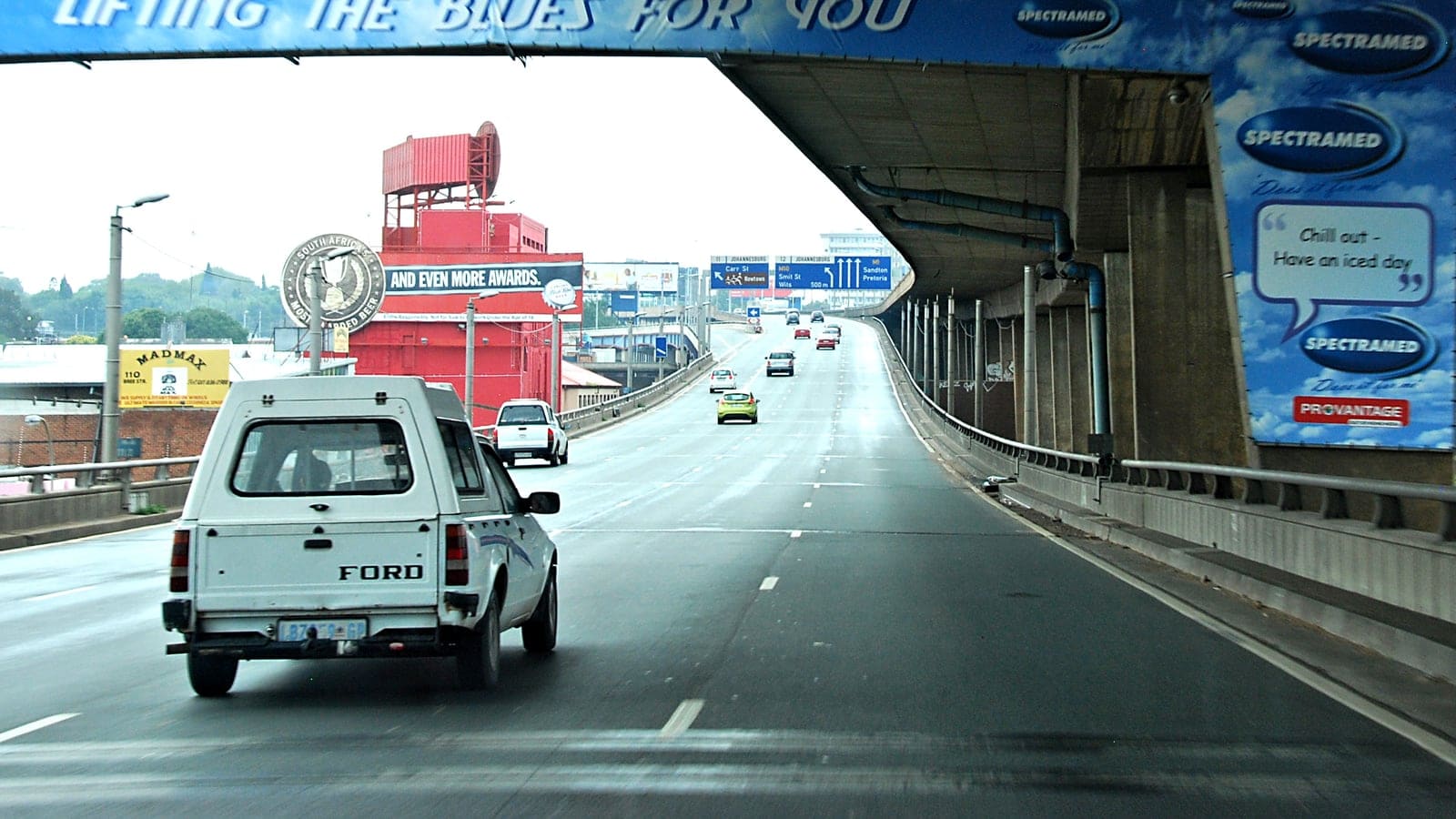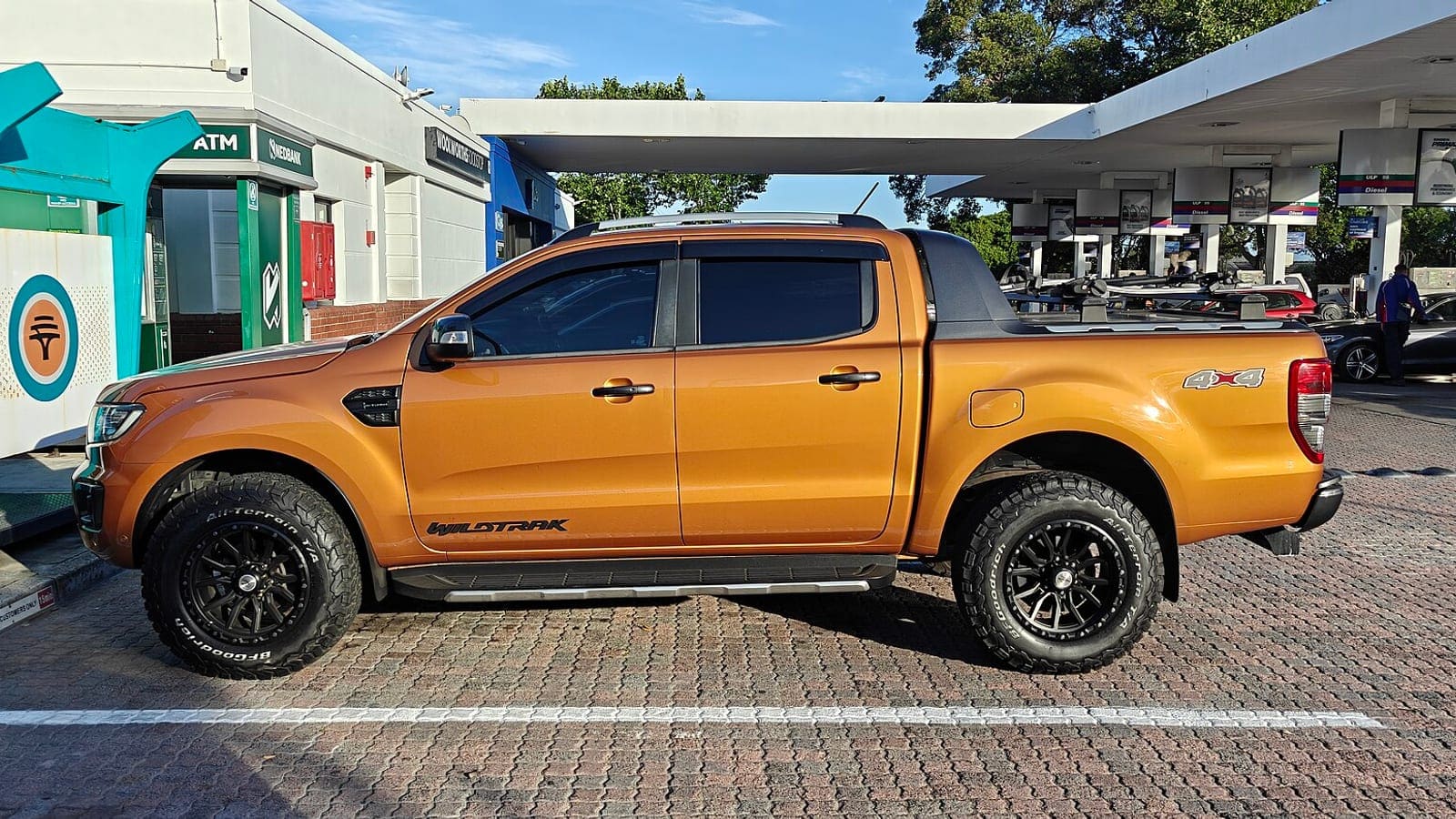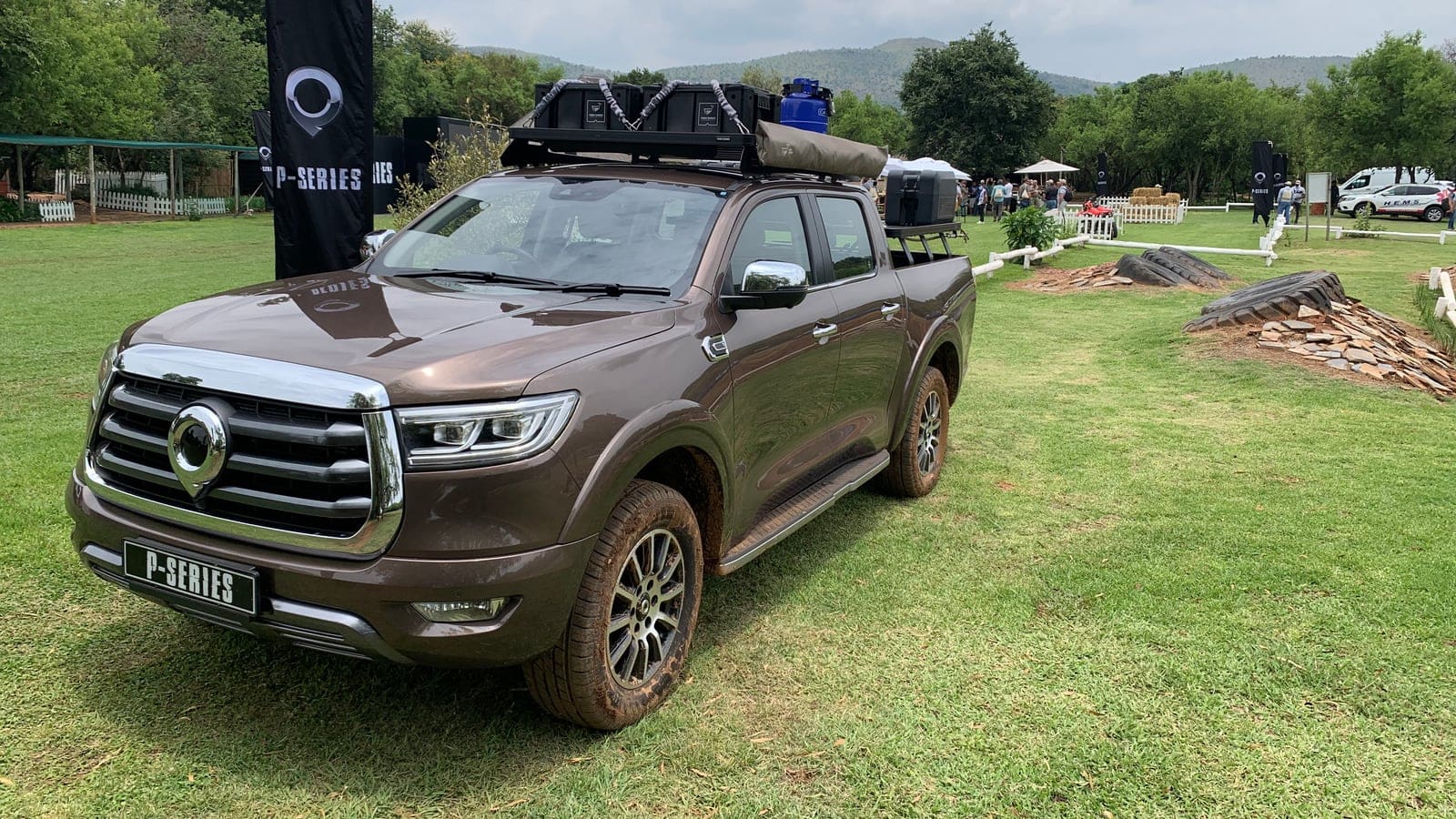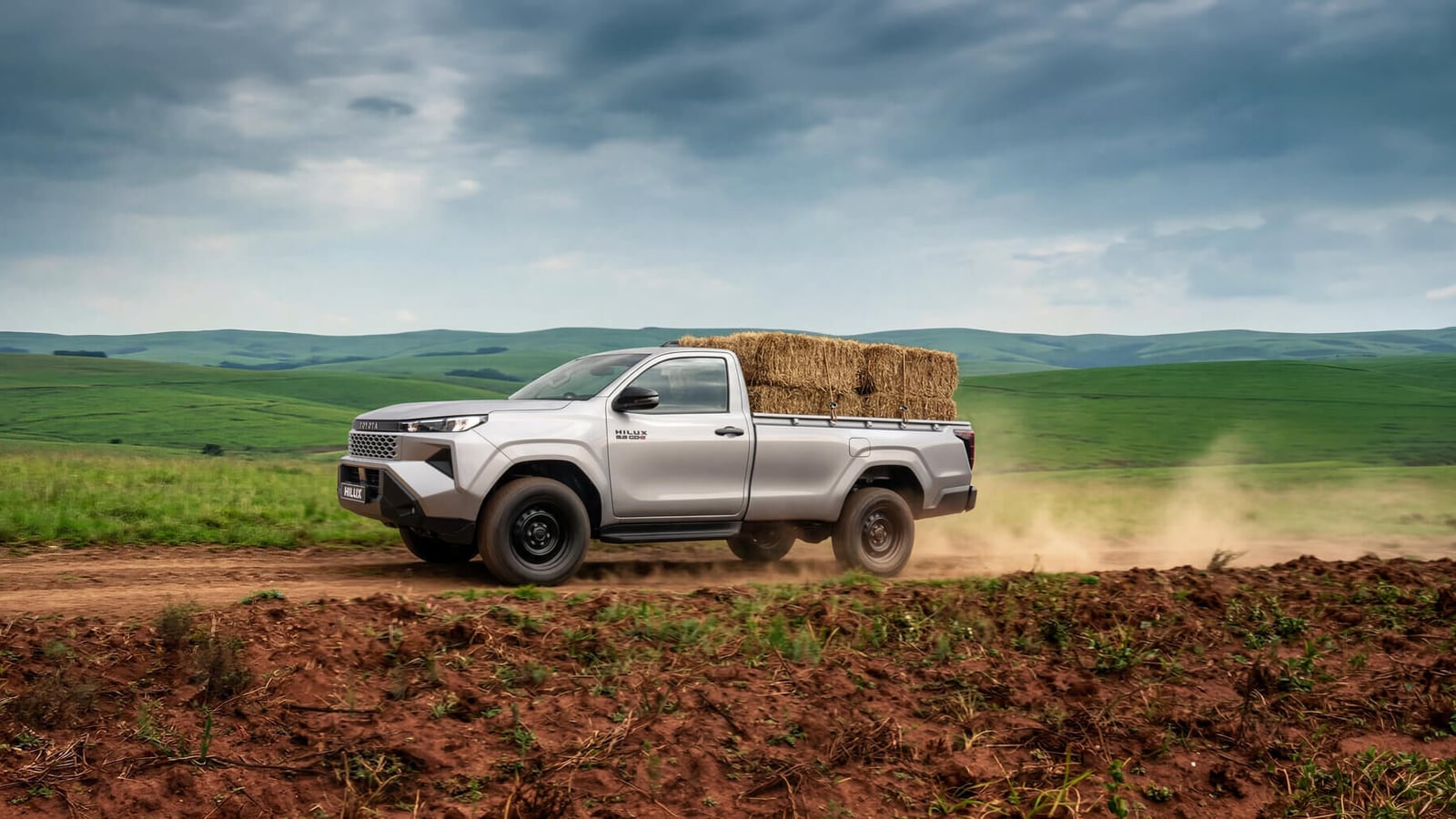
Ask a South African what a bakkie is and he will describe a double cab. Ask a farmer, a builder or a fleet manager and he will describe the other one. Two doors, two seats, and a bed you can lie down in.
The two bodies share an engine, a chassis and a badge. They do not share a price. A used Hilux double cab asks about R180,000 more than a used Hilux single cab. That looks like the most expensive pair of doors in the country. It is not.
Prices are asking prices from September 2026, taken from every bakkie listed for sale in South Africa. They are what sellers ask, not what bakkies sell for. The current numbers are on the Hilux, Ranger and D-Max listings pages.
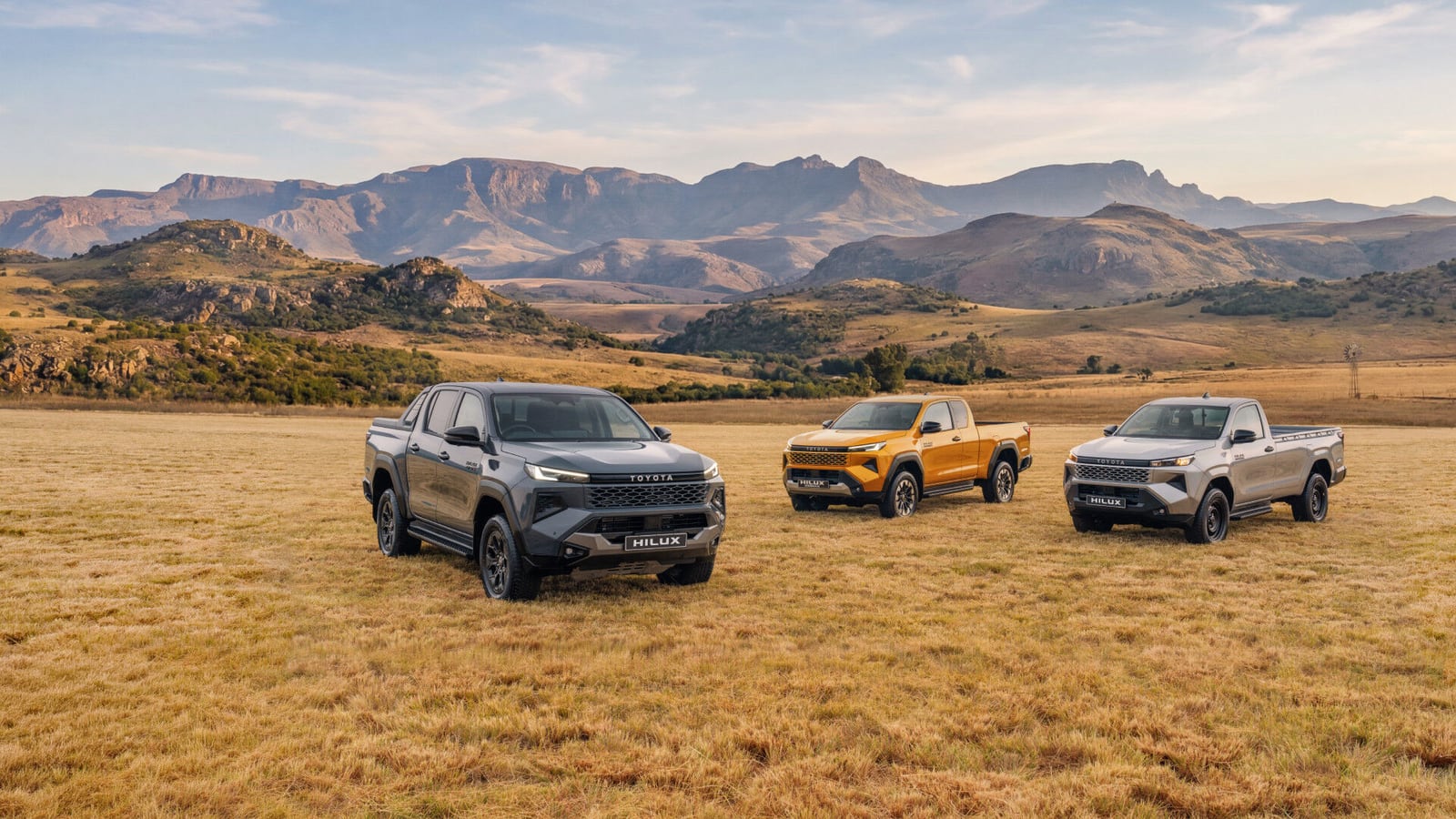
The gap, model by model
Take every used bakkie for sale and split each model into double cabs and single cabs. This is what each body asks.
| Bakkie | Double cab asks about | Single cab asks about | Gap | For sale (double / single) |
|---|---|---|---|---|
| Toyota Hilux GD-6 | R560,000 | R380,000 | R180,000 | 1,900 / 590 |
| Ford Ranger | R450,000 | R260,000 | R190,000 | 4,700 / 430 |
| Isuzu D-Max | R525,000 | R330,000 | R200,000 | 1,200 / 450 |
| VW Amarok | R570,000 | R390,000 | R180,000 | 1,100 / 50 |
| Mitsubishi Triton | R540,000 | R315,000 | R225,000 | 130 / 25 |
| Nissan Navara | R440,000 | R360,000 | R80,000 | 690 / 80 |
| GWM P-Series | R380,000 | R300,000 | R80,000 | 580 / 65 |
| Mahindra Pik Up | R330,000 | R260,000 | R70,000 | 270 / 340 |
| Toyota Hilux D-4D (old shape) | R270,000 | R200,000 | R70,000 | 290 / 80 |
What you are looking at: the typical asking price of every used double cab and single cab of that model, whatever the year or trim. The Navara single cab is a new model, so its used ones are mostly demos and its gap is not a fair one.
The gap is smallest where both bodies are work bakkies: the Pik Up and the old D-4D Hilux.
Same year, same engine, same trim: what the doors cost
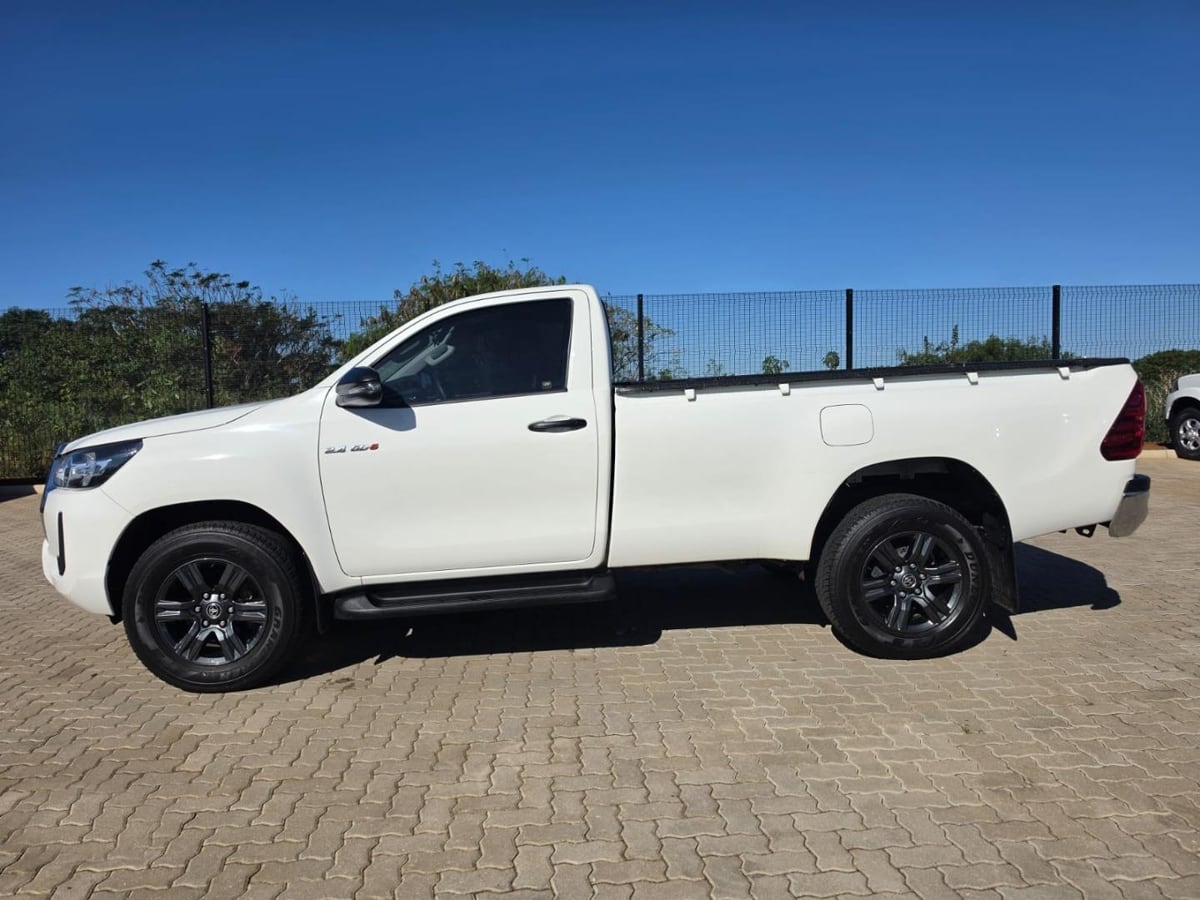
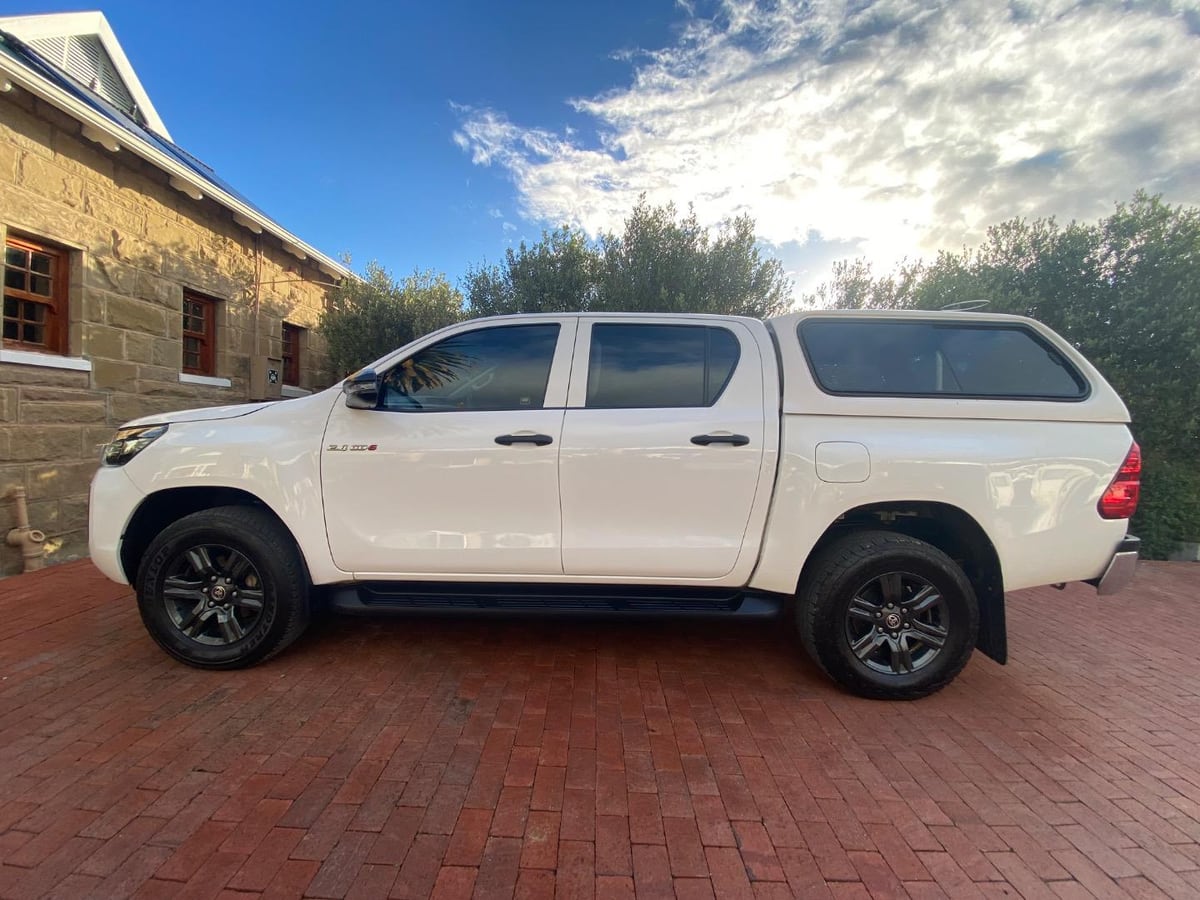
The table above compares a 2019 XL with a 2025 Wildtrak. Compare the same year and the Hilux gap drops from R180,000 to R160,000. Compare the same year, engine, drive and trim and it drops to R60,000. This is the table to price a bakkie from. Used bakkies only.
| Bakkie, used | Double cab asks about | Single cab asks about | The second row costs | What you are looking at |
|---|---|---|---|---|
| 2023 Hilux 2.4 GD-6 Raider 4x2 | R450,000 | R390,000 | R60,000 | Same trim both sides. The cleanest Hilux comparison |
| 2025 Hilux 2.4 GD-6 Raider 4x2 | R550,000 | R470,000 | R80,000 | Newer, with more automatics on the double cab side |
| 2023 Hilux 2.4 GD-6 4x4 (any trim) | R510,000 | R440,000 | R70,000 | Single cab 4x4s are SR and Raider workhorses |
| 2023 Ranger 2.0 XL 4x2 | R420,000 | R330,000 | R90,000 | New shape, fleet spec on both sides |
| 2024 Ranger 2.0 XL 4x2 | R450,000 | R385,000 | R65,000 | Same, a year newer |
| 2021 Ranger 2.2 4x2 (old shape) | R300,000 | R245,000 | R55,000 | Nearly all XLs. The cheap end of the market |
| 2023 D-Max 1.9 4x2 | R400,000 | R320,000 | R80,000 | Double cabs include LS automatics; single cabs are L manuals, so the true gap is lower |
| 2021 D-Max 250 4x2 (old shape) | R340,000 | R270,000 | R70,000 | The old 2.5 engine, both bodies worked |
| 2023 Pik Up 2.2 4x2 | R290,000 | R210,000 | R80,000 | S4 and S6 on both sides |
| 2025 Pik Up 2.2 4x2 | R350,000 | R260,000 | R90,000 | Same, with a lot of dealer demos |
On the same bakkie, the second row costs R55,000 to R90,000 used. That is 15 to 30 percent on a Hilux or Ranger, and nearer 40 percent on a Pik Up, because the bakkie is cheap and the doors are not. New, the factory charges R60,000 to R90,000 for the same doors. The used market prices them the same way. The rest of the R180,000 headline is other things.
Where the rest of the money goes
Trim. The single cabs for sale are work spec. Three out of four Ranger single cabs are XLs, and there is not one Wildtrak among them. More than a quarter of Ranger double cabs are Wildtraks. You are not comparing bodies. You are comparing an XL with a Wildtrak.
Drive and gearbox. Hilux single cabs say 4x4 in one advert out of five. Double cabs say it in more than half. Nine out of ten Hilux single cabs are manuals, and three out of four double cabs are automatics.
Age and mileage. Everyone expects this one, and it is only true on the Ranger. The typical used Ranger single cab is a year older than the double cab and has done about 40,000 km more. On the Hilux and D-Max the single cabs for sale are young. More than half are 2023 to 2025 models: fleet returns, sold at two or three years old after a hard life. Compare the same year and a Hilux single cab usually has 20,000 to 40,000 km more than the double cab.
What the single cab gives you
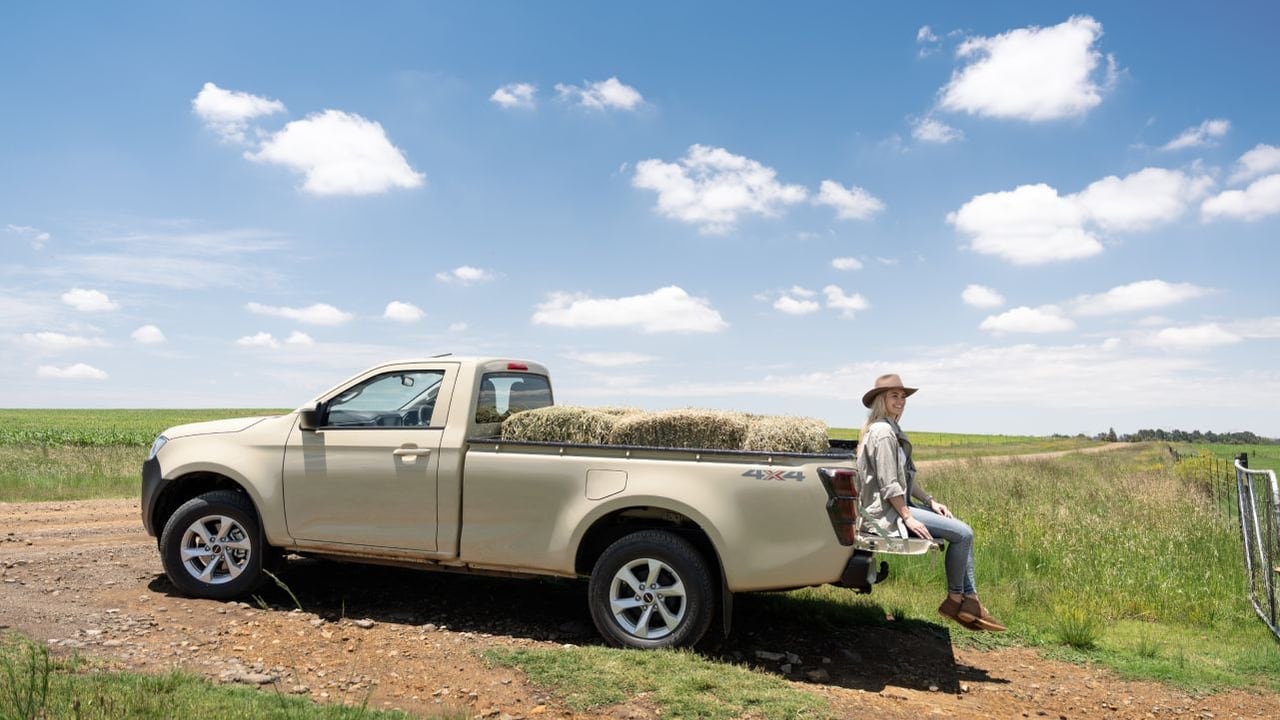
The single cab is not a double cab with the back seats taken out. It is a different tool.
A longer bed. A D-Max single cab bed is 2,330 mm long, and the double cab bed is 1,495 mm. A pallet, a quad bike or a 2.4 m board goes in a single cab with the tailgate up. In a double cab it does not.
More payload. The single cab is lighter, so it carries more on the same chassis. On the same trim the gain is small on a Hilux and big on a Ranger. The stripped workhorse grades carry the most: the Hilux 2.4 GD S carries 1,085 kg and the D-Max 1.9 LR carries 1,305 kg.
| Bakkie, same engine and trim | Single cab carries | Double cab carries | The single cab carries extra |
|---|---|---|---|
| Hilux 2.4 GD-6 Raider 4x2 manual | 920 kg | 865 kg | 55 kg |
| Hilux 2.4 GD-6 SR 4x4 manual | 860 kg | 835 kg | 25 kg |
| D-Max 1.9 L 4x2 manual | 1,225 kg | 1,120 kg | 105 kg |
| Ranger 2.0 XL 4x4 manual | 1,186 kg | 970 kg | 216 kg |
| Pik Up 2.2 4x2 | 1,195 kg | 1,095 kg | 100 kg |
| Navara 2.5 (best in range) | 1,144 kg | 1,086 kg | 58 kg |
What you are looking at: the makers’ own payload figures for the current models in South African spec. Payload is everything the bakkie may carry, people and fuel included.
The VAT. For a VAT-registered business the real gap is bigger than the sticker gap. The VAT Act calls a double cab a motor car, and SARS does not let a business claim the VAT on a motor car, whatever it is used for. A single cab is tested on the length of its load bed against its cabin. A normal single cab has a far longer bed than cabin, so a VAT-registered business can claim the VAT on it. Running costs such as servicing, repairs and insurance can be claimed on both bodies, for the business share of use. This is set out in SARS Interpretation Note 82. A tax adviser must confirm how it applies to your case.
In rand, on the current Hilux 2.4 Raider: the single cab is about R554,000 new and the double cab about R625,000. The business gets about R72,000 of VAT back on the single cab and nothing on the double cab. So the doors cost the business about R143,000, not R71,000. That is one big reason work bakkies are single cabs. The flip side: when a business sells a single cab it claimed VAT on, it must charge VAT on the sale. That is one reason ex-fleet single cabs go through dealers and auctions.
The new-price gap
| Bakkie, same engine and trim | Single cab | Double cab | The doors cost |
|---|---|---|---|
| Hilux 2.4 GD-6 SR 4x2 manual | R513,000 | R584,000 | R71,000 |
| Hilux 2.4 GD-6 Raider 4x2 manual | R554,000 | R625,000 | R71,000 |
| Hilux 2.8 GD-6 SRX 4x4 automatic | R664,000 | R753,000 | R89,000 |
| Ranger 2.0 XL 4x2 automatic | R594,000 | R656,000 | R62,000 |
| Ranger 2.0 XL 4x4 automatic | R670,000 | R740,000 | R69,000 |
| D-Max 1.9 L 4x2 manual | R484,000 | R574,000 | R90,000 |
| Navara 2.5 XE 4x2 manual | R434,000 | R493,000 | R60,000 |
| Triton 2.4 GL 4x4 manual | R560,000 | R640,000 | R80,000 |
| GWM P300 SX 2WD manual (September 2025 launch prices) | R415,000 | R447,000 | R32,000 |
What you are looking at: the makers’ own recommended prices, VAT included, for the same engine and trim in both bodies, September 2026. Isuzu charges the most for its doors and GWM the least.
The entry gap is a different number. The cheapest Hilux, the 2.0 petrol S single cab, is about R380,000, and the cheapest double cab, the 2.4 SR, about R584,000. That R204,000 is a stripped workhorse against a proper double cab, the same trim effect the used market shows. And the half-ton bakkie is gone. Nissan stopped the NP200 in 2024 and nothing has replaced it. The cheapest new one-tonners are the Pik Up S4, from about R280,000, and the petrol Hilux S.
How single cabs sell
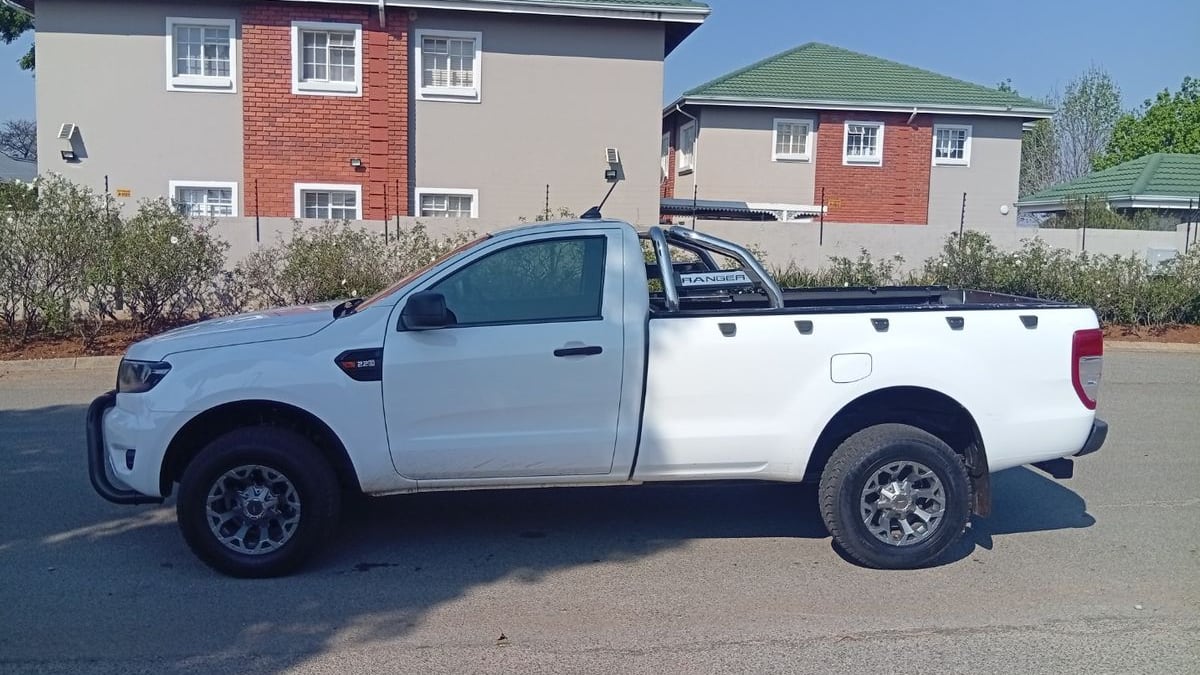
Here is the fact that turns the used market on its head. In the first half of 2026, Toyota sold more Hilux single cabs than double cabs: 8,101 against 7,887. Isuzu did the same, with 4,849 D-Max single cabs against 4,415 double cabs. Four out of five Pik Ups sold were single cabs. Ford went the other way: 707 Ranger single cabs against 10,075 double cabs.
So where are they? Not on the used market, where single cabs are one in six of the bakkies for sale. Fleets buy single cabs and keep them: government departments, mines and rental companies. When a fleet lets them go, they go by trade or under the hammer, and sometimes the driver buys the one he drove.
So on the Hilux and D-Max, a used single cab is usually a fleet return, two or three years old with 60,000 to 200,000 km. The history is almost never in the advert. Ask for the registration certificate, count the previous owners, and see whether the first was a company or a bank. On the Ranger, a used single cab is simply rare. Ford sold about 1,000 in the whole of 2025, so the used ones are the older 2.2 XLs.
Does a single cab sell faster or slower? Nobody in South Africa publishes that by body. AutoTrader’s own research for the first half of 2026 found a used Hilux took about 27 days to sell and a used Ranger about 36, all bodies together. Our own data gives no sign that single cabs move faster. The buyer of a single cab is usually a business, and businesses buy from dealers and auctions. Price your exit as a trade sale. An auction looks cheap until the paperwork: VAT is charged on the hammer price, the buyer’s premium and the R2,500 document fee.
The extended cab
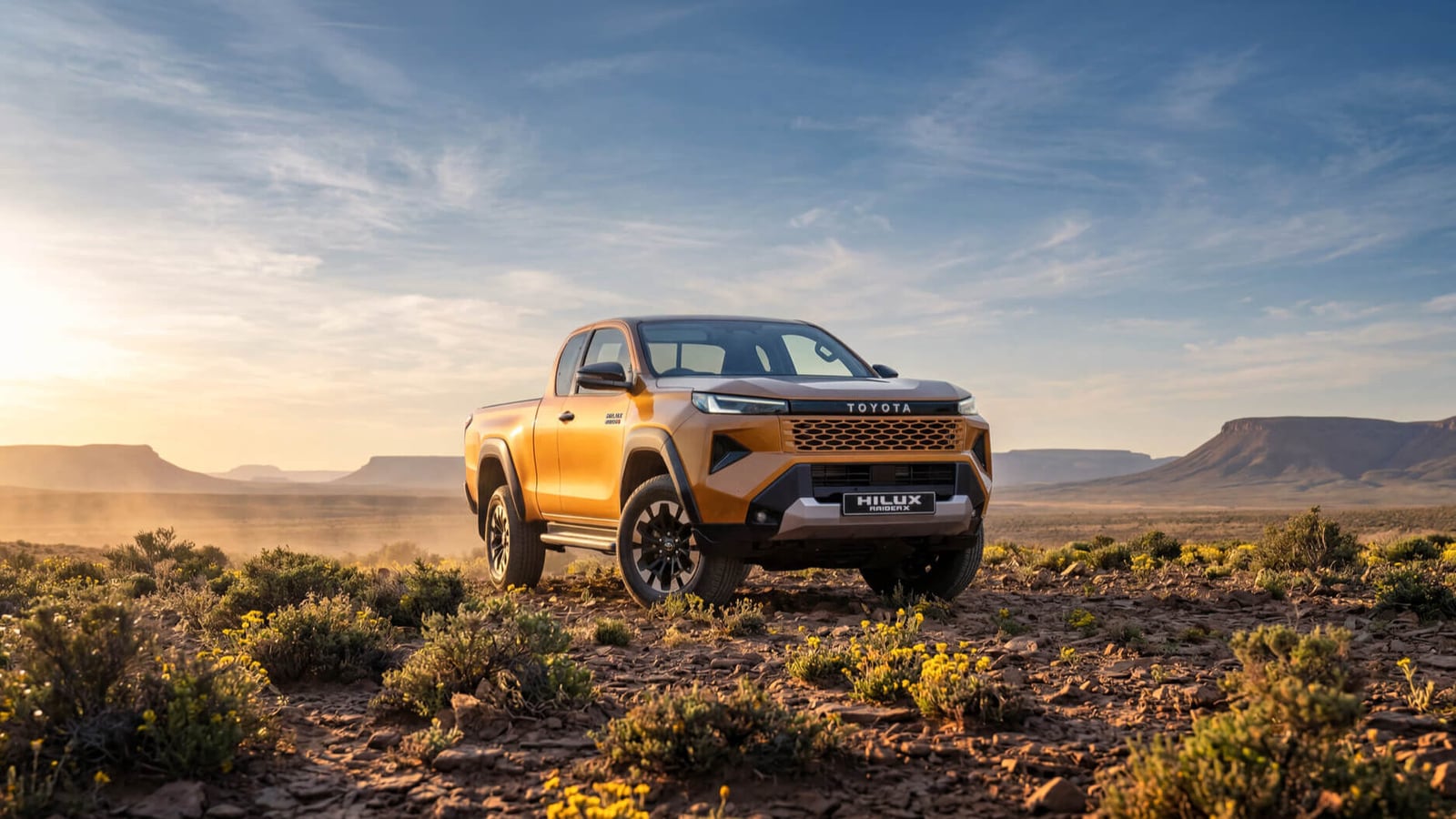
Toyota calls it the Xtra Cab, Ford the SuperCab, Isuzu the Extended Cab. Motoring writers call it the cab-and-a-half. Two doors, a short space behind the seats for bags or a dog, and a bed between the other two in length. On the D-Max the bed is 1,805 mm and the payload sits between the other two bodies. On the Hilux the Xtra Cab Raider carries 825 kg, less than either body. Isuzu’s jump seats have no seatbelts.
New, the extended cab is priced next to the single cab: the Ranger SuperCab XL is R9,500 over it. Used, it sits closer to the double cab. A used Ranger SuperCab asks about R370,000, against R260,000 for the single cab and R450,000 for the double. On the same year and trim it is R30,000 to R60,000 under the double cab.
It is not rare. There are about a thousand Ranger SuperCabs for sale, more than there are Ranger single cabs, and they come as XLT, Sport and Wildtrak. The VAT is the catch. SARS measures the cabin against the bed on an extended cab. If the cabin is longer, it counts as a motor car and the VAT cannot be claimed. Measure the one you are buying, and ask a tax adviser before you count on the refund.
The traps on the single cab side
The cheap Hilux has less safety kit. The 2.0 petrol S and 2.4 GD S single cabs, the fleet grade, have three airbags and no stability control. Toyota’s own 2026 spec sheet says so. Every Hilux double cab has seven airbags and stability control, and so do the SR, Raider and SRX single cabs. A used 2.4 GD S is a good work tool and a poor family car. Check the grade, not the badge. Every D-Max single cab has stability control; on a Pik Up it only arrives on the S6. The Nissan NP300 double cab scored zero stars for adult protection in the 2018 Global NCAP test for Africa, and nobody has tested the single cab.
Ex-fleet at private prices. A 2023 D-Max single cab with 159,000 km was asking about R250,000 in Gauteng. That is 53,000 km a year. Price it on kilometres and service history, not the year.
Holes and hardware. One in four single cabs for sale mentions a roll bar, nudge bar or tow bar. Each was bolted through the bed or the chassis. When the fleet strips its canopy and logo boards, the holes stay. Lift the liner and look at the bed floor, the bin tops and the chassis rails behind the cab.
Overload wear. A 1,085 kg payload invites 1,500 kg. Look for a nose-up stance when empty, cracked spring hangers and a clutch that judders. And check for aircon: Toyota lists the 2.0 S with and without it, and a cheap ask often means without.
The traps on the double cab side
Paying twice. The body premium and the trim premium are separate. An S single cab to a Legend double cab is body plus two trims plus an automatic. The market lets you pay all three.
The 4x2 double cab. The Raider double cab with the raised body is the volume seller. It carries 865 kg, less than a workhorse single cab, and it has no low range. “RB” on a Toyota and “Hi-Rider” on a Ford mean 4x2 on 4x4 suspension. Adverts often leave the drive out, so ask.
The status tax. In 2016 double cabs outsold single cabs in this country for the first time. An Afrikaans academic has since written about the well-off owner whose snorkel and bull bar sit on a bakkie whose bin has never carried cement. One forum buyer admitted it was mostly about looks. The forum told him what R250,000 buys: a six-year-old 2.2 4x2 with 250,000 km.
Hijacking. Nobody in South Africa publishes hijack numbers by cab. The Hilux tops every list and the Ranger sits third, in any body. Syndicates want the engine and the panels, and a single cab has the same ones. Fit the tracker either way.
Which body for which buyer
The farmer replacing a workhorse. A single cab, and if the VAT applies, the choice is made. Specify the SR on a Hilux for the seven airbags, or any D-Max single cab.
The small builder. A single cab, and a used fleet return is fine if the registration certificate and service record are clean. Lift the liner. Budget for the springs.
The courier owner-driver. A single cab, and the Pik Up is the cheapest way in. If a lockable dry space behind the seats matters, the extended cab, once you have measured it for the VAT.
The family with one vehicle. A double cab, and there is no point pretending otherwise. Decide on 4x4 or 4x2 before you decide on the trim, and pay for the body once and the trim once.
The buyer who wants the double cab for the look. That is fine, as long as you know what you are paying for. On a 2023 Hilux 2.4 Raider the doors cost about R60,000. The Legend badge, the automatic and the 4x4 are the rest.
Whichever body you pick, compare it with its own year and body, not with the headline gap. The Hilux, Ranger, D-Max and Pik Up pages show every bakkie next to the going rate for its year.
Questions people ask
How much more does a double cab cost than a single cab in South Africa?
It depends on how fairly you compare. Take every used one for sale, and a Hilux double cab asks about R180,000 more than a single cab. On a Ranger the gap is about R190,000 and on a D-Max about R200,000. Compare the same year, engine and trim and the second row costs R60,000 to R90,000. The rest is trim, 4x4 and automatics, because the double cabs for sale are the fancy ones. New, on the same trim, the doors cost R60,000 to R90,000 on a Hilux, Ranger or D-Max.
Can a business claim the VAT on a bakkie?
On a single cab, usually yes. On a double cab, no. The VAT Act names the double cab as a motor car, and SARS does not allow the VAT on a motor car to be claimed, whatever the bakkie is used for. A single cab is tested on the length of its load bed against its cabin. A normal single cab has a far longer bed, so a VAT-registered business can claim the VAT. On a R554,000 Hilux Raider single cab that is about R72,000 back. A tax adviser must confirm it for your case.
Are single cabs older and higher mileage than double cabs?
Only on the Ranger. The typical used Ranger single cab is a year older than the double cab and has about 40,000 km more on it. On the Hilux and D-Max the single cabs for sale are young. Most are fleet returns, two or three years old, that have done a lot of kilometres a year. Compare the same year and a single cab usually has 20,000 to 40,000 km more than the double cab.
Is a single cab as safe as a double cab?
Not always. The cheapest Hilux single cabs, the 2.0 petrol S and the 2.4 GD S, have three airbags and no stability control. Every Hilux double cab has seven airbags and stability control. The SR, Raider and SRX single cabs match the double cab. Every Isuzu D-Max single cab has stability control. On a Mahindra Pik Up it only arrives on the S6. Check the grade on the spec plate, not just the badge.
Figures are seller asking prices aggregated from South African listing platforms and dealers, not final selling prices. Most vehicles transact below asking. Updated continuously.
buying-guidedouble-cabsingle-cabmarket-data