Nobody in South Africa asks which Hilux to buy. They ask which 2.8 they can afford, and whether a 2.4 will do. Then there is the other crowd. They walk straight past the new shape to a 2014 3.0 D4D with the scoop on the bonnet and 250,000 km on the clock. And they pay R300,000 for it without blinking.
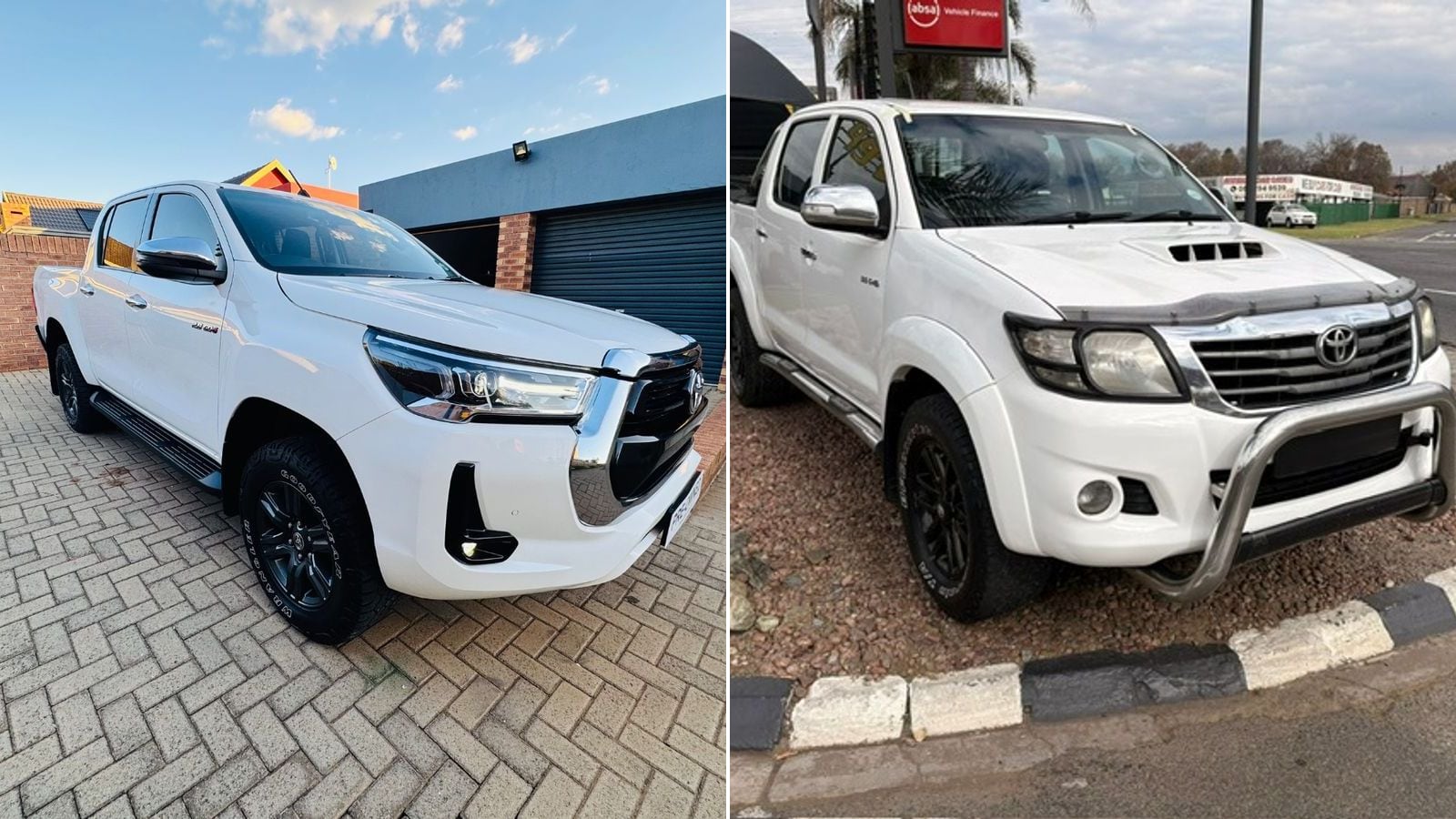
Both crowds are right about something. The newer GD6 is the better bakkie. It tows without a fight, uses less fuel and rides better, though with nothing in the bin the back end still skips about on a gravel road. The older D4D is the better-looking one, and it holds its value like nothing else on a forecourt.
Prices in this guide are asking prices from September 2026, taken from every Hilux listed for sale across South Africa. They are what sellers ask, not what bakkies sell for. The current numbers are on the Hilux listings page and the GD-6 and D-4D market pages.
The four engines, side by side
Compare like with like. Any braai will correct you if you say “D4D versus GD6”. There are two of each. The old 2.5 was replaced by the 2.4, and the old 3.0 by the 2.8.
| 2.4 GD-6 | 2.8 GD-6 | 2.5 D-4D | 3.0 D-4D | |
|---|---|---|---|---|
| Sold | 2016 to now | 2016 to now | 2005 to 2016 | 2005 to 2016 |
| Power | 110 kW | 130 kW, then 150 kW from 2020 | 75 kW, then 106 kW from 2012 | 120 kW |
| Gearbox | 6-speed | 6-speed | 5-speed manual only | 5-speed manual, or an automatic |
| For sale now | about 1,900 | about 2,100 | about 100 | about 250 |
| Asks about | R430,000 | R640,000 | R210,000 | R280,000 |
| Typical km | 90,000 | 60,000 | 220,000 | 250,000 |
That last row explains most of the price gap. The GD6s for sale are young, and many are nearly new dealer stock. The D4Ds are deep into their second decade. You are not really comparing two engines. You are comparing a young bakkie with an old one, and the prices follow the mileage.
One more thing to know before you shop: dealers are cutting GD6 prices hard right now. About four in ten of them dropped their price in the last month, typically by R10,000. D4D prices barely move.
Reading a Hilux advert
South Africans shop by badge before engine, so here is the ladder from the bottom. Workhorse, S and SR are the fleet, farm and mine bakkies. SRX was the mid-range badge until 2020. Raider is the big seller, about one in five Hiluxes sold. Legend is the lifestyle flagship. It started as an anniversary edition (Legend 35, 40, 45, 50, 55) and became a permanent model in 2020. Inside, a Legend and a Raider are nearly the same bakkie. Legend RS adds a roller shutter on the bin. GR-Sport is the fast one, with 165 kW. Dakar was a 2015 special edition on the old shape, and it fetches collector money.
In the advert titles, “P/U D/C” means a double cab, “S/C” a single cab and “X/C” or “Xtra Cab” the one with the small back seat. “RB” means raised body: a two-wheel drive sitting on 4x4 suspension. Nearly half of Hilux adverts don’t say whether the bakkie is 4x4 or 4x2, so ask. And “is it a 3.0?” always means the 3.0 D4D.
The GD-6: most buyers end up here, and the choice is 2.4 or 2.8
The current-shape Hilux arrived in 2016 with the two new engines, six-speed gearboxes, a stiffer chassis and a cabin that finally looked like the money. The 2020 facelift gave the 2.8 automatic 150 kW and 500 Nm, added Apple CarPlay, and made Legend a permanent model. The 165 kW GR-Sport followed in 2022 and a mild-hybrid 2.8 in 2024.
Here is what a GD6 asks by year, with the mileage you can expect:
| Year | Asks about | Typical km |
|---|---|---|
| 2026 | R690,000 | new or demo |
| 2025 | R600,000 | 30,000 |
| 2024 | R550,000 | 70,000 |
| 2023 | R490,000 | 100,000 |
| 2022 | R460,000 | 110,000 |
| 2021 | R450,000 | 133,000 |
| 2020 | R420,000 | 137,000 |
| 2019 | R390,000 | 150,000 |
| 2018 | R380,000 | 169,000 |
| 2017 | R375,000 | 172,000 |
| 2016 | R370,000 | 190,000 |
The first three years take R200,000 off. The next four take only R100,000. So a three-to-five-year-old GD6 is where the value sits: someone else has paid the steep part. (The small kink at 2022 is the April 2022 flood, which shut the Durban factory for four months and left that model year thin.)
Now the engine question. There are about as many 2.4s for sale as 2.8s, but the 2.8 costs a lot more. Same year for year, the gap is around R80,000 to R100,000 on the older bakkies and R145,000 to R175,000 on the 2020-onwards ones. The gap doubles at 2020 because that is when the 2.8 automatic got its 150 kW engine. That is the whole decision.
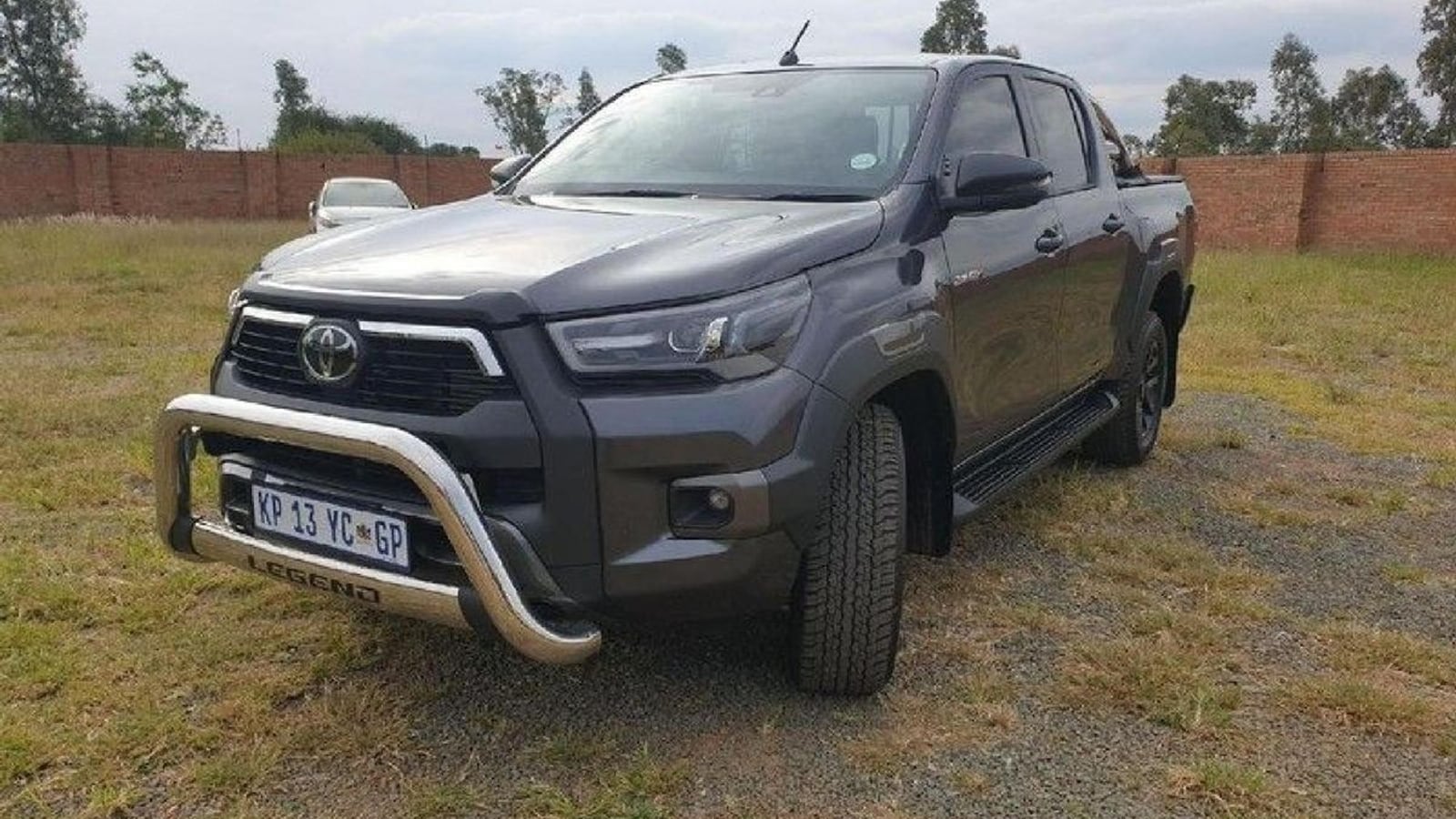
The 2.8
Up to 2020 the 2.8 made 130 kW. From 2020 the automatic makes 150 kW and 500 Nm. The number that matters is not the peak, it is where the pulling power arrives: the 2.8 pulls hard from about 1,200 rpm, the 2.4 from about 1,600. In sixth gear on the N1, that is the whole difference.
The 150 kW automatic, in Raider or Legend trim with 4x4, is the most traded premium bakkie in the country. A 2.8 Legend double cab 4x4 automatic asks around R750,000. The same bakkie as a Raider asks around R590,000. The older 130 kW bakkies from 2016 to 2019 are a separate, cheaper market at around R420,000 with 170,000 km.
What goes wrong is well known. One thing first: South African GD6s do not have a diesel particulate filter. If a dealer tells you the bakkie “needs a highway run to regenerate”, he is reading from an Australian forum. The real list:
- Injectors. South African diesel wears them out, usually between 120,000 and 200,000 km. R4,000 to R10,000 each, R20,000 to R35,000 for a set. Ask what fuel filter was fitted and how often.
- Timing chain, on engines built before mid-2017. A factory fault. Toyota replaced them under warranty, but out of warranty it is R12,000 to R25,000, and if the chain jumps it bends valves. On a 2016 or 2017, ask for the job card.
- Turbo actuator. Sticks at around 120,000 to 180,000 km and puts the bakkie in limp mode. R5,000 to R10,000, or R25,000 to R45,000 if it has taken the turbo with it.
- Dust in the airbox. The lid warps, dust reaches the sensor, and the bakkie cuts out. Cheap to fix, but it tells you the bakkie has lived on dirt roads.
- The automatic past 100,000 km. A shudder at light throttle between 50 and 80 km/h. R6,000 to R18,000 for the valve body, R22,000 to R55,000 if it is the torque converter.
Watch for the tired early bakkie at new-bakkie money. A 2017 Raider 4x4 automatic with 282,000 km asking R470,000 is 2020 money for a bakkie that is about to need injectors. A 2020 at R500,000 has the better engine and the chain problem behind it.
Buy the 2.8 if you tow anything heavy, if it is the family car as well, or if the badge matters when you sell. Go for 2020 or newer for the 150 kW automatic, or 2018 or newer to avoid the early years.
The 2.4
Nobody forgets the 2.4. They look down on it. One South African reviewer wrote that some buyers “won’t be seen dead in a 2.4 Hilux” and will pay R190,000 more for the badge. He then concluded that the 2.4 is all the engine most people will ever need. It is a status problem, not a capability problem.
In July 2026 it was the second most traded used bakkie in the country, just behind the 2.8. It is the engine under most Raiders and nearly every SRX and fleet single cab.
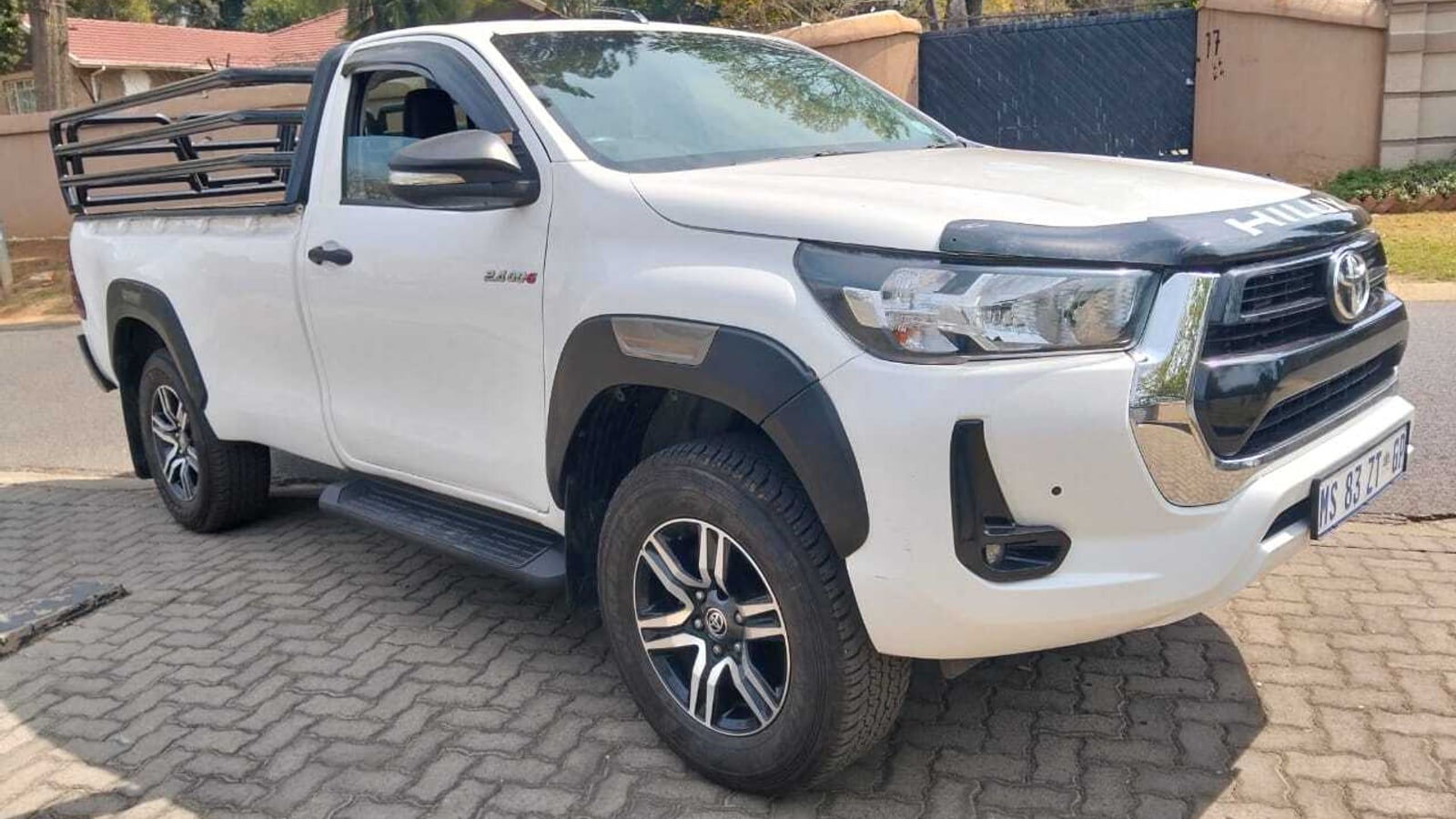
The 2.4 asks around R430,000 as a group. A 2.4 Raider double cab asks about R540,000, an SRX double cab about R385,000, and the 2016 to 2019 bakkies about R330,000. The forum rule is “rather a 2.4 with 4x4 than a 2.8 without”, and the prices agree: a 2.4 4x4 costs less than a 2.8 4x2.
Two things to watch. An advert that just says “2.4 GD-6” can be a basic S or SR with the lower 343 Nm engine, sold at the price of the 400 Nm one. And the 2.4 has the same injectors, airbox and turbo actuator as the 2.8, but more of them have done 200,000 km of fleet work on the cheapest service. Injectors are the most common complaint on used 2.4s. On a manual from 2017 to 2019, test the change from first to second when the bakkie is cold, three times, because some of them baulk.
Buy the 2.4 if the bakkie is going to work rather than tow, and you would rather keep R100,000 to R180,000 than have pulling power you won’t use. Insist on the Toyota service printout, not the stamps in the book.
The D-4D: the old shape
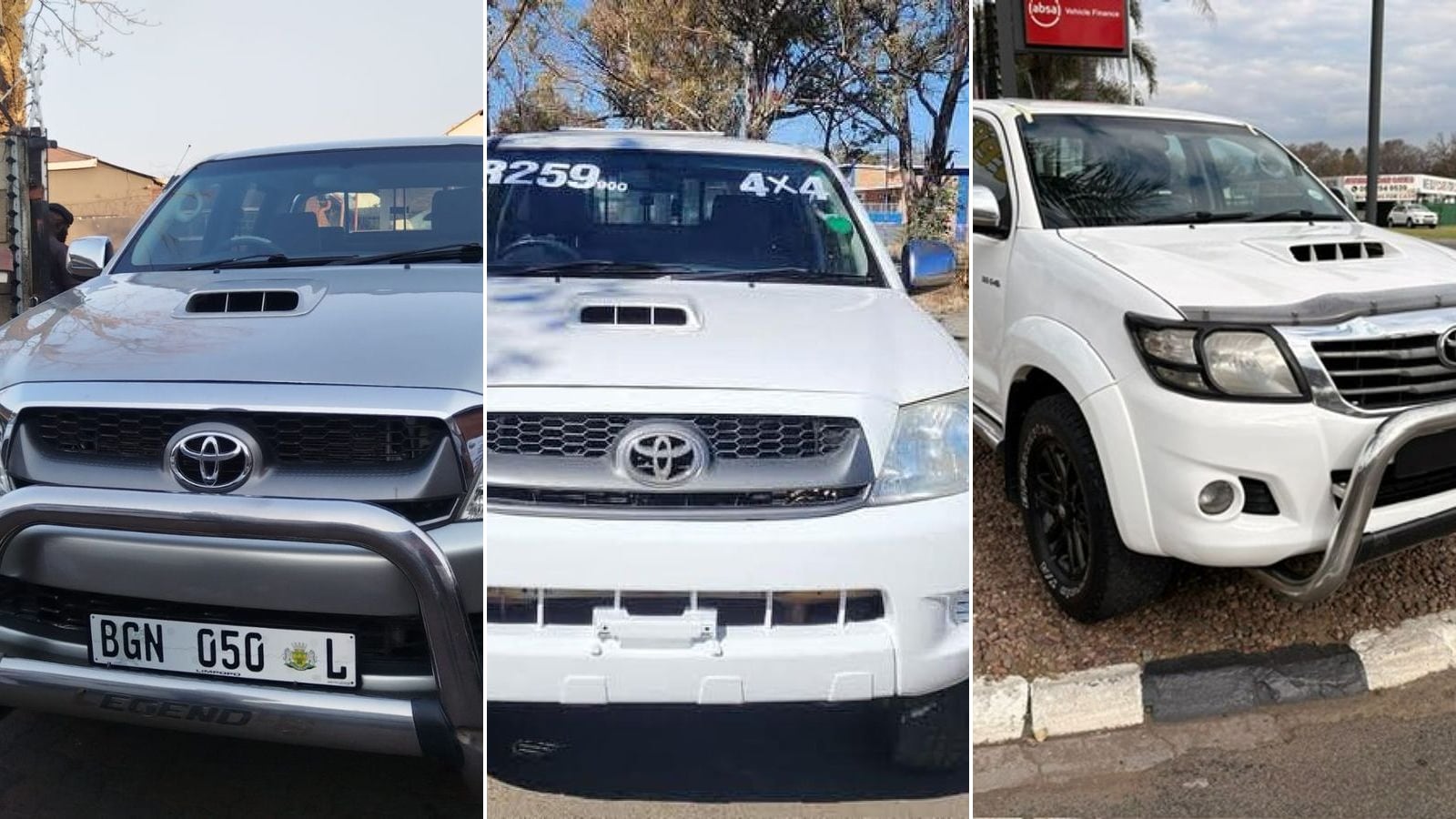
Then there is the old one. The seventh-generation Hilux was sold here from 2005 to early 2016, and it is the bakkie behind most of the legend. The scoop on the bonnet feeds an intercooler on top of the engine. The 3.0 makes 120 kW and 343 Nm. The 2.5 made 75 kW until 2012, then an intercooled version with 106 kW. The early 3.0 automatics had a four-speed gearbox; from the 2011 facelift it was a five-speed.
Be honest about who buys one. The love is for the look and the resale, not for the drive. When a D4D owner with 200,000 km posted on a forum that he was shopping, he wanted a 2019 or 2020 GD6 automatic. The replies agreed. Towing with the D4D, they told him, had been an arm-wrestle by comparison. D4D fans buy GD6s when they actually shop. Two things hold the price up. A smaller crowd wants that bakkie specifically. And under R300,000 there is almost no GD6 for sale except worn 2.4 single cabs.
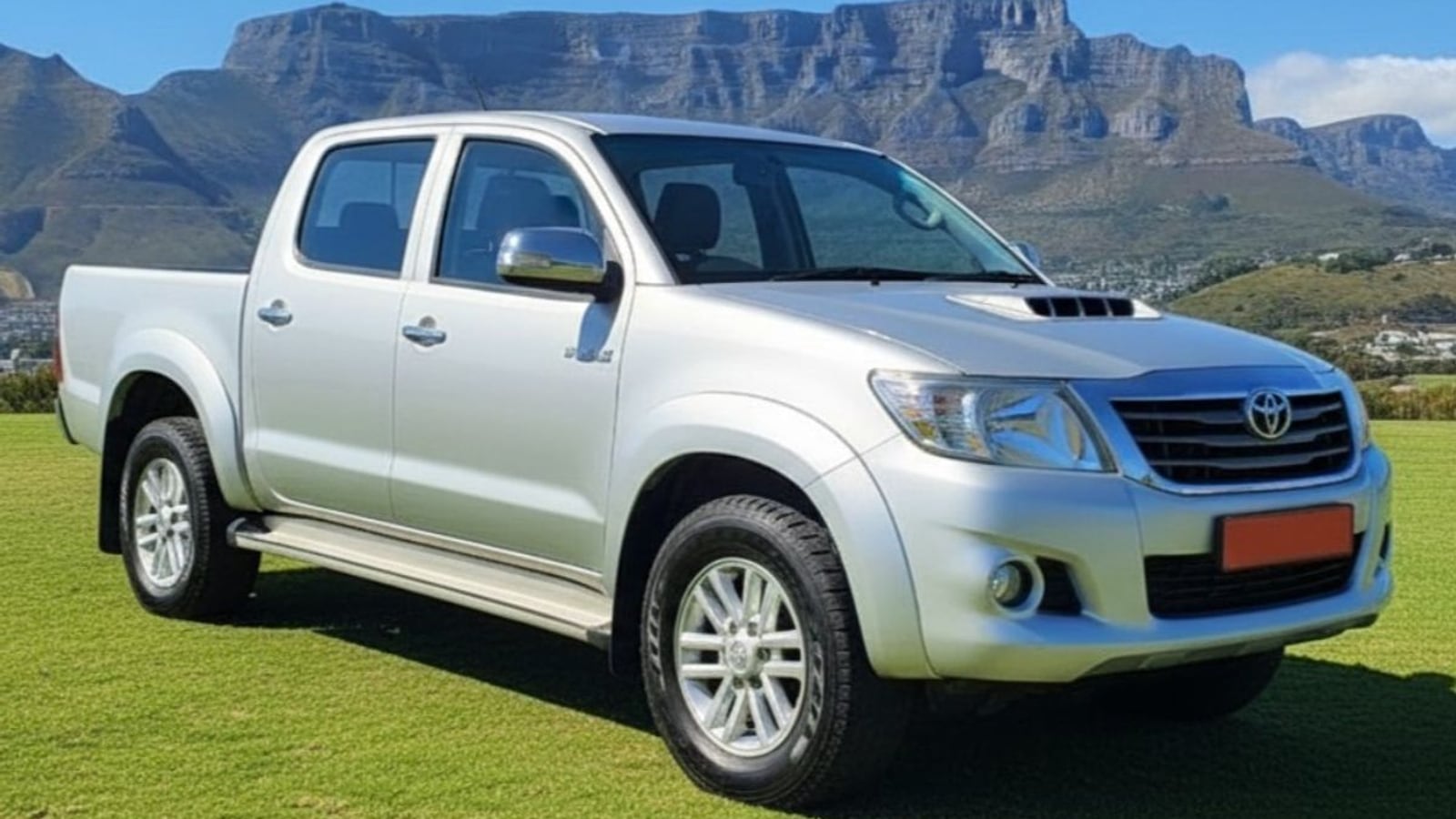
Here is what a D4D asks by year. The 3.0 column is the one most buyers want:
| Year | All D4Ds ask about | 3.0 asks about |
|---|---|---|
| 2016 | R267,000 | R290,000 |
| 2015 | R282,000 | R320,000 |
| 2014 | R255,000 | R299,000 |
| 2013 | R269,000 | R300,000 |
| 2012 | R275,000 | R275,000 |
| 2011 | R260,000 | R270,000 |
| 2010 | R250,000 | R264,000 |
| 2009 | R220,000 | R250,000 |
| 2008 | R220,000 | R225,000 |
| 2007 | R220,000 | R225,000 |
| 2006 | R230,000 | too few to say |
| 2005 | R200,000 | R210,000 |
Read it from the bottom up. A 2008 asks R220,000 and a 2015 asks R280,000: seven years of age for R60,000. A 2005 3.0 still asks two thirds of what a 2015 3.0 asks, on a twenty-year-old bakkie. And a 2015 3.0 D4D, a year older and with far more kilometres, asks more than a 2016 2.4 GD6. That is the “Toyota tax”, which is the two-word explanation locals give for the resale premium, with a shrug.
The odometer has stopped mattering. D4Ds with over 300,000 km ask the same as ones with under 150,000 km, around R230,000. What moves the price is the spec, the condition and the paperwork. An automatic asks about R40,000 more than a manual. A 2011-on body asks about R80,000 more than the older shape. A Legend 45 asks more than a plain Raider of the same year.
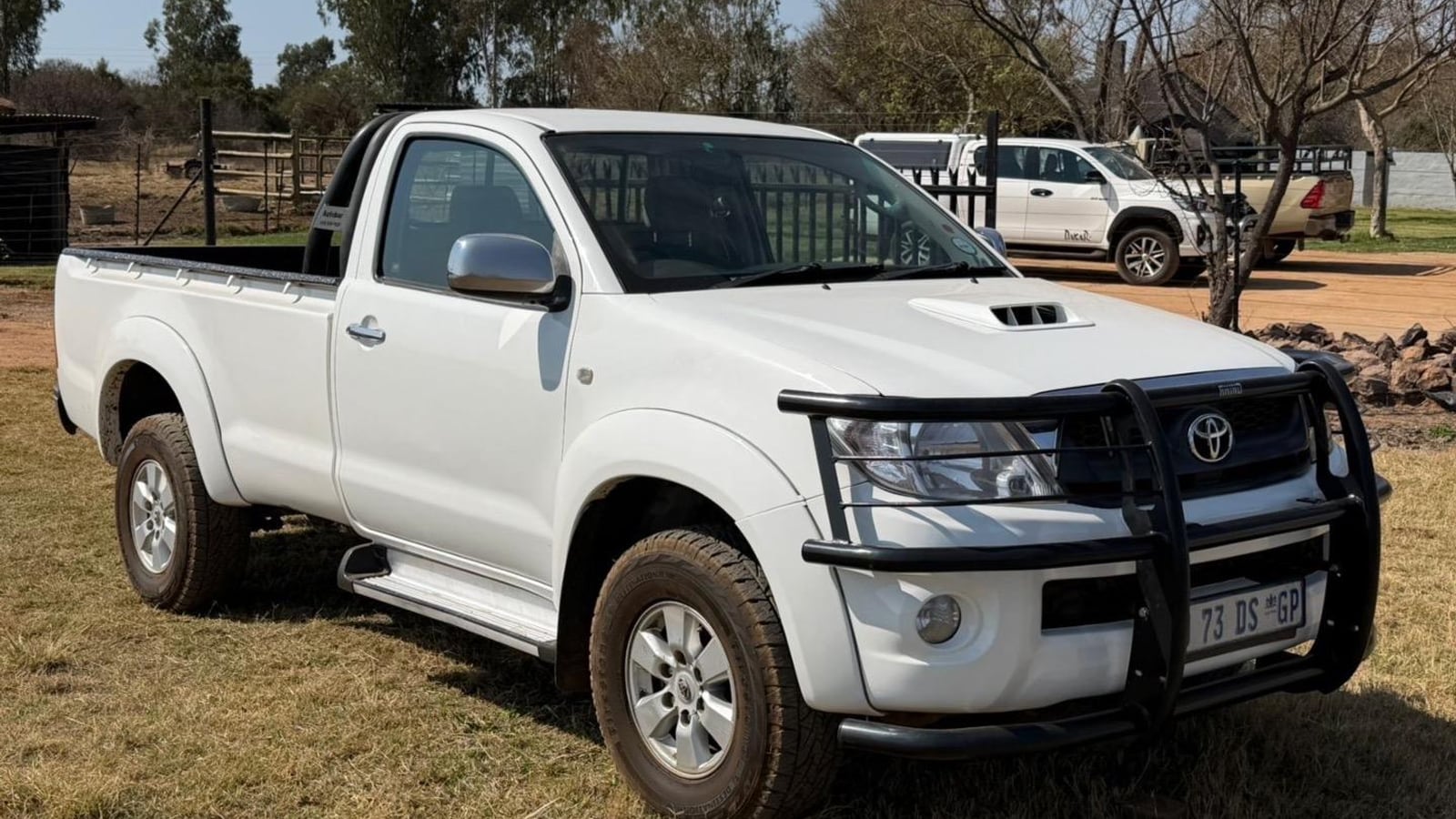
That is good news for the seller. For the buyer it means paying new-GD6 money for a bakkie with a quarter of a million kilometres on it. Nearly half of the D4Ds for sale have 250,000 km or more, and one 2012 3.0 Raider in Gauteng is asking R290,000 with 711,000 km. The closest thing to a sold price is the last price on a listing before it was withdrawn. On that measure, 2013 D4Ds went for about R192,000 against an asking price of R269,000. There is room to negotiate.
Which one to buy: the 3.0 is the engine to have. The 2012-onwards 106 kW 2.5 is the sleeper, with the same 343 Nm as the 3.0 in a lighter, cheaper bakkie. The 75 kW 2.5 is a workhorse and should be priced as one. And a 2011-onwards body is worth the extra, for the nicer nose, the better cabin, and the five-speed automatic.
What goes wrong is more than the legend admits. The first thing a local asks about a 3.0 is “seals done?”, and it is the right question:
- Injector seals. A cheap copper washer under each injector that fails under pressure, especially on bakkies built before August 2007. When it goes, exhaust gas blows into the sump and turns the oil to sludge. A seal and injector service is R8,000 to R18,000. Miss it and you are looking at R80,000 to R150,000 for an engine. Listen for a knock on a cold start.
- Cracked pistons, on engines built from mid-2006 to the end of 2013. A metallic knock, black smoke, loss of power, and a rebuild at R50,000 to R80,000. Nobody mentions this one at the braai.
- Turbo actuator. The same fault as the GD6. R4,500 to R15,000.
- Clutches and the old automatic. Clutches on bakkies that towed go early, R15,000 to R28,000 with the flywheel. The four-speed automatic’s valve body wears out somewhere between 140,000 and 220,000 km.
The D4Ds you hear about that did a million kilometres had their seals done every 40,000 km and a new fuel filter every 10,000. The ordinary ones cracked pistons and sludged up. The paperwork tells you which one you are looking at.
The Ranger question
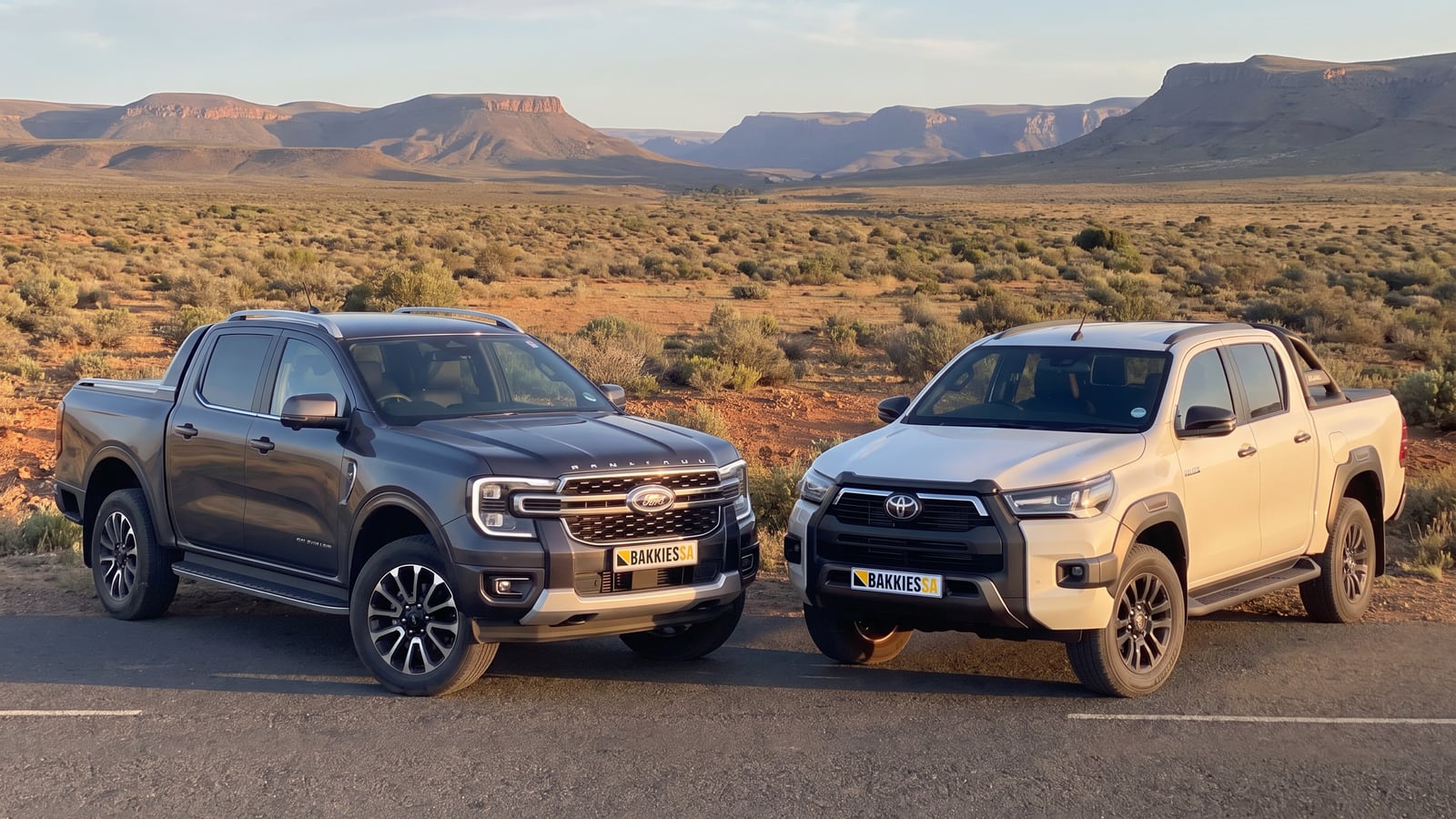
Every Hilux conversation in this country has a Ranger in it. The Hilux is the workhorse and the resale king. The Ranger owns the lifestyle double cab market and outsells the Hilux second-hand. Yet the average used Hilux is a year older, has 28,000 km more on it, and asks nearly the same money. Same year, this is what the two ask:
| Year | Hilux GD-6 | Ford Ranger | The difference |
|---|---|---|---|
| 2024 | R550,000 | R560,000 | Ranger R10,000 more |
| 2022 | R460,000 | R380,000 | Hilux R80,000 more |
| 2020 | R420,000 | R340,000 | Hilux R80,000 more |
| 2018 | R380,000 | R255,000 | Hilux R125,000 more |
From 2023 the new-shape Ranger asks more, but that is because the Rangers for sale are mostly Wildtraks and V6s while the Hiluxes are mostly Raiders. The Hilux premium does not buy a better engine (the Ranger’s 2.0 bi-turbo has 157 kW and a ten-speed), a longer warranty, or cheaper insurance. It buys a flatter price curve after five years and a bakkie you can sell privately in an afternoon. Both forum scripts are true: the Ranger feels like a Merc after your old D4D, and dealing with Ford’s dealers is the biggest downside. The Ranger vs Hilux guide goes through all of it.
Buying the most hijacked bakkie in the country
None of this is a reason not to buy a Hilux. It is the reason a Hilux guide with no mention of a tracker would read as if it was written somewhere else.
Theft and hijacking. The Hilux tops every most-hijacked list in South Africa. Business bakkies are twice as likely to be hijacked as stolen, and just over half of those hijackings are in Gauteng. Roughly a third of stolen vehicles cross a border. In June 2026 a R700,000 Legend taken in Tshwane was stopped at speed on the N1 outside Polokwane, heading for Beitbridge. The forum joke is that if you are unhappy with your 2.4, you can buy a 2.8 after the 2.4 is stolen.
Insurance. For the same driver, comprehensive cover runs from about R1,600 to R4,200 a month in Gauteng, and R900 to R1,800 in the Western Cape. You will not get theft cover without an approved tracker on a paid-up subscription (R85 to R110 a month). Some insurers now want two. And the excess on a theft claim is two to three times the excess on an accident.
Cloned bakkies. More than 20,000 stolen vehicles a year come back onto the market with another vehicle’s VIN plate and forged papers. If a cloned bakkie is identified, you lose the bakkie, the money and your insurance. Before you pay, check that the VIN plate, the chassis stamping, the windscreen sticker and the engine number all match the registration document. A police clearance is free at any station. Never pay cash to a private seller who cannot prove ownership.
Clocked odometers. It pays best on a D4D, because the price ignores the mileage anyway: wipe 150,000 km off a farm bakkie and it is suddenly worth R30,000 to R60,000 more. The defence is Toyota’s service printout for the VIN, which shows the kilometres at every visit. Stamps in a book are not a history.
The airbag recall. The Takata airbag recall covers every Hilux from 2004 to 2015, and eleven years in, four in ten affected Toyotas in South Africa have still not been fixed. The fix is free. Check the VIN at toyota.co.za/recall or through the AA on 0861 001 323, and make it a condition of sale on any D4D.
Before you pay for any Hilux: a fault-code scan (about R1,500), a cold start with the bonnet up, the Toyota service printout, the timing chain job card on a 2016 or 2017 GD6, the seal invoice on a 3.0, and the papers above.
Every Hilux engine, for decoding adverts
| Engine | Years | Power | Torque | What to know |
|---|---|---|---|---|
| 2.5 D-4D | 2005 to 2011 | 75 kW | 200 to 260 Nm | No intercooler. Slow, simple, cheap to run |
| 2.5 D-4D intercooled | 2012 to 2016 | 106 kW | 343 Nm | The good 2.5. Same torque as the 3.0 |
| 3.0 D-4D | 2005 to 2016 | 120 kW | 343 Nm | The engine of the era. 4-speed auto to 2011, 5-speed after |
| 2.7 petrol | 2005 to 2016 | 118 kW | 241 Nm | Popular with low-mileage private owners |
| 4.0 V6 petrol | 2005 to 2019 | 175 kW | 376 Nm | Thirsty, rare, sought after |
| 2.4 GD-6 | 2016 on | 110 kW | 343 Nm (S, SR), 400 Nm (SRX 4x4 up) | Six-speed manual or auto |
| 2.8 GD-6 | 2016 to 2020 | 130 kW | 420 Nm manual, 450 Nm auto | The pre-facelift 2.8 |
| 2.8 GD-6 | 2020 on | 150 kW | 500 Nm auto, 420 Nm manual | The one everyone wants |
| 2.8 GD-6 GR-Sport | 2022 on | 165 kW | 550 Nm | The fast one |
| 2.8 GD-6 48V | 2024 on | 150 kW | 500 Nm | Mild hybrid. Smoother, not much thriftier |
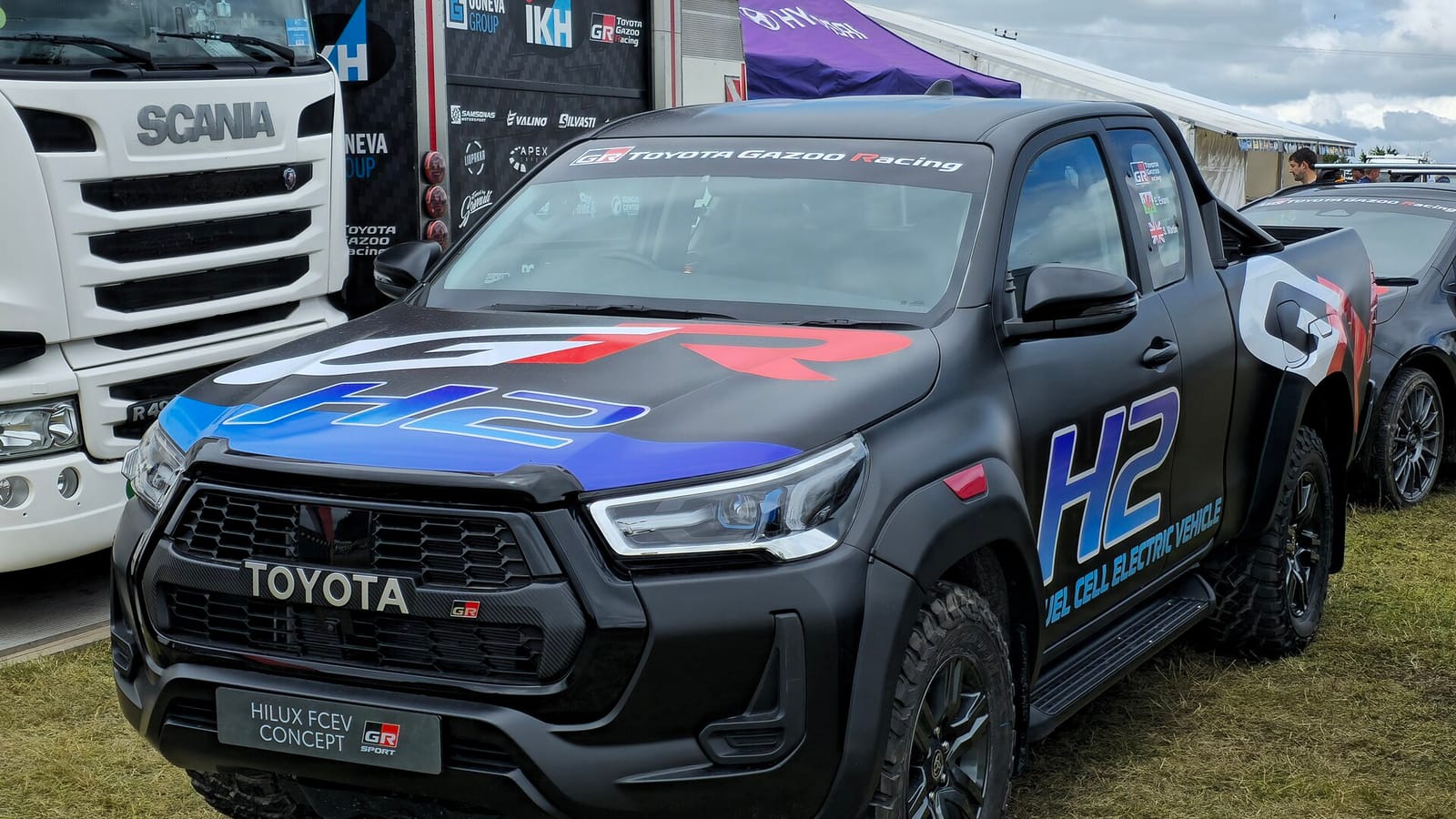
Every D4D from 2005 has the bonnet scoop, so the scoop tells you nothing about the engine. The 3.0 always had an intercooler, and only the 2012-onwards 2.5 is the good one. The new-shape Hilux that went on sale in June 2026 is covered in the hydrogen Hilux guide.
Which one to buy
Most people should buy a GD6, and the only question is the engine. The 2.8 if you tow, if it is the family car too, or if resale matters, and 2020 or newer for the 150 kW automatic. The 2.4 if the bakkie works rather than tows and you would rather keep the money, with the Toyota service printout as a condition of sale.
The D4D if you want that bakkie specifically, or if you have under R300,000 and want a Hilux that has finished losing value. The 3.0, or the 2012-onwards 2.5, in a 2011-onwards body if you can find one. Buy on condition, not year. Ask “seals done?” first and check the airbag recall last.
Whichever you choose, look at the Hilux listings page first. It shows every bakkie for sale next to the going rate for its year, so you know before you phone whether the price is high or low.
Questions people ask
Is the Hilux 2.4 GD-6 or 2.8 GD-6 better?
The 2.8 is the stronger engine and the one with the badge. As a group, 2.8s ask about R640,000 and 2.4s about R430,000, but the 2.8s for sale are newer. Same year for year, the 2.8 costs about R80,000 more on a 2016 and about R175,000 more on a 2024. Up to 2020 the 2.8 made 130 kW; from 2020 the automatic makes 150 kW and 500 Nm. The 2.4 makes 110 kW. If you tow anything heavy, drive 4x4 in the mountains, or care about the badge, buy the 2.8. Otherwise the 2.4 is all the engine most owners ever use. It was the second most traded used bakkie in the country in July 2026, and it has the same faults as the 2.8, not more.
What is the difference between a Hilux GD-6 and a Hilux D-4D?
The generation. D-4D Hiluxes are the old shape with the scoop on the bonnet, sold from 2005 to early 2016 with the 2.5 and 3.0 D-4D engines. GD-6 Hiluxes are the current shape, sold from 2016 with the 2.4 and 2.8 GD-6 engines, six-speed gearboxes and a modern cabin. Adverts write both with and without the hyphen. A typical D-4D asks about R250,000 with around 236,000 km. A typical used GD-6 asks about R480,000 with around 94,000 km.
Is the Hilux 2.5 D-4D any good?
It depends which one. Up to 2011 the 2.5 D-4D made only 75 kW, and it is slow with a load on. From 2012 a new version with an intercooler made 106 kW and 343 Nm, the same pulling power as the 3.0, in a lighter and cheaper bakkie. That one is a proper engine. Every 2.5 has the bonnet scoop, so the bonnet tells you nothing; check the year. A 2.5 D-4D asks about R210,000 against R280,000 for a 3.0. There are no 2.5 automatics, so an advert that claims one is wrong.
Do Hilux D-4Ds hold their value?
Better than anything else on the used bakkie market. A 2015 D-4D asks about R280,000 and a 2008 about R220,000: seven years of age for R60,000. Within a year, mileage barely moves the price. D-4Ds with more than 300,000 km ask the same as ones with under 150,000 km, about R230,000. What moves the price is the spec (a 3.0, 4x4, an automatic, a Legend 45), the condition and the paperwork. Remember these are asking prices. Trade-in prices on the same years sit 16 to 35 percent lower.
What goes wrong with a used Hilux 2.8 GD-6?
Injectors on South African diesel, typically between 120,000 and 200,000 km, at R4,000 to R10,000 each or R20,000 to R35,000 for a set. A factory timing-chain fault on engines built before about mid-2017, which Toyota replaced under warranty; out of warranty it is R12,000 to R25,000, and a jumped chain bends valves. The turbo's stepper-motor actuator sticks around 120,000 to 180,000 km (R5,000 to R10,000, or R25,000 to R45,000 if the turbo goes with it). The airbox lid lets fine dust onto the MAF sensor on gravel-road bakkies, causing cut-outs and limp mode. The six-speed automatic can develop a light-throttle shudder past 100,000 km. South African GD-6s have no diesel particulate filter, so any DPF or regeneration story you hear is imported from Australia.
Is a used Hilux expensive to insure?
Yes, because it is the most hijacked vehicle in the country on every list published in 2025 and 2026. Comprehensive cover on a Hilux for the same driver runs R1,634 to R4,162 a month in Gauteng against R898 to R1,820 in the Western Cape, and roughly R3,000 a year more than the equivalent Ranger. Insurers require an approved tracker with an active subscription (R85 to R109 a month) and some now want two. Theft excesses run two to three times the accident excess. Budget for it before you agree a price.
Figures are seller asking prices aggregated from South African listing platforms and dealers, not final selling prices. Most vehicles transact below asking. Updated continuously.
hiluxbuying-guidegd-6d-4d